Last updated November 20, 2026
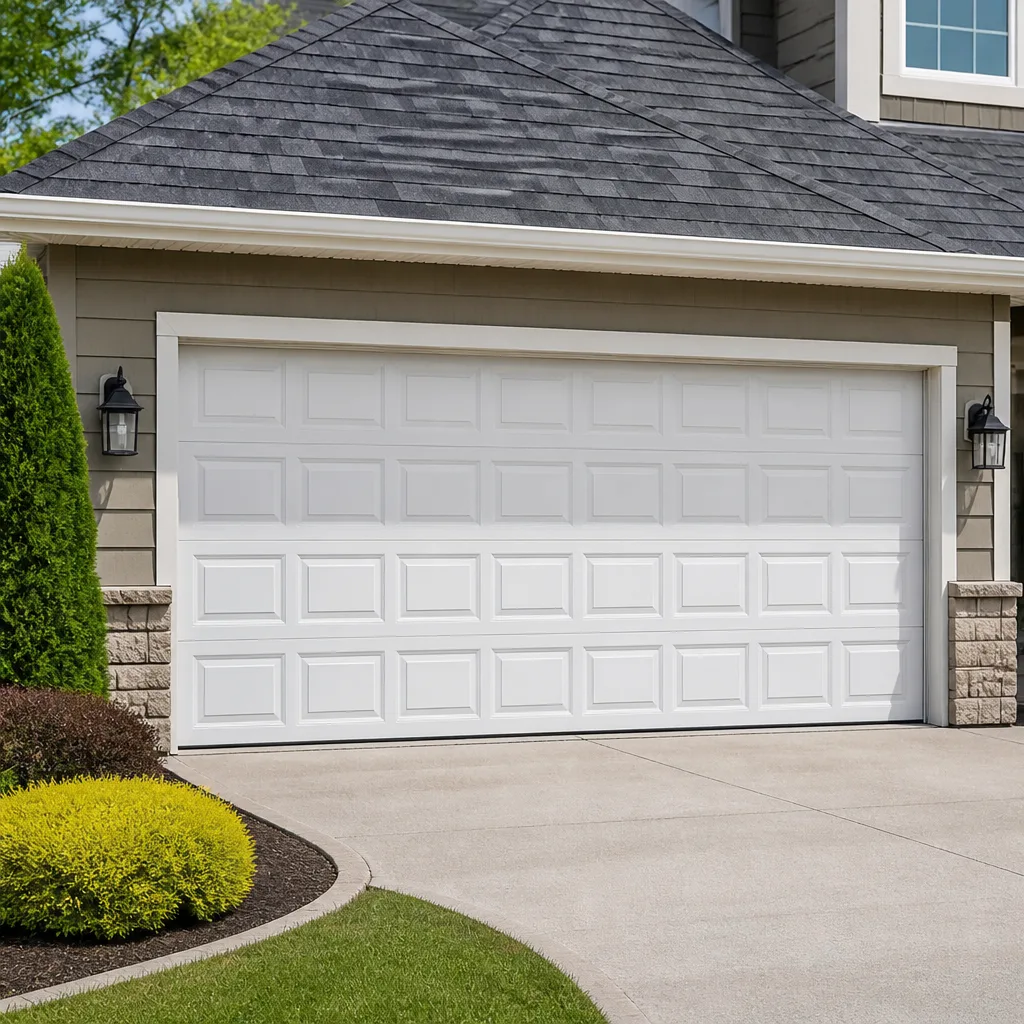 Raised-panel steel
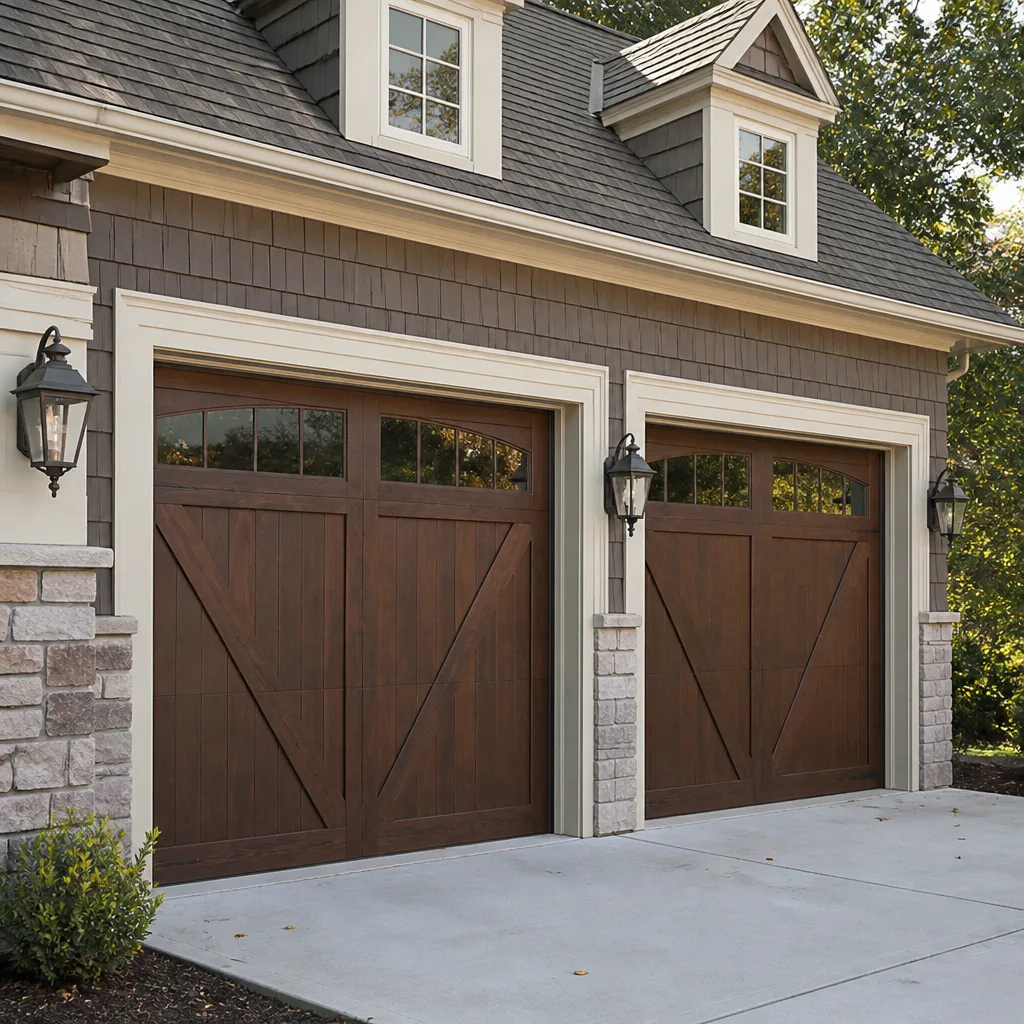 Carriage house
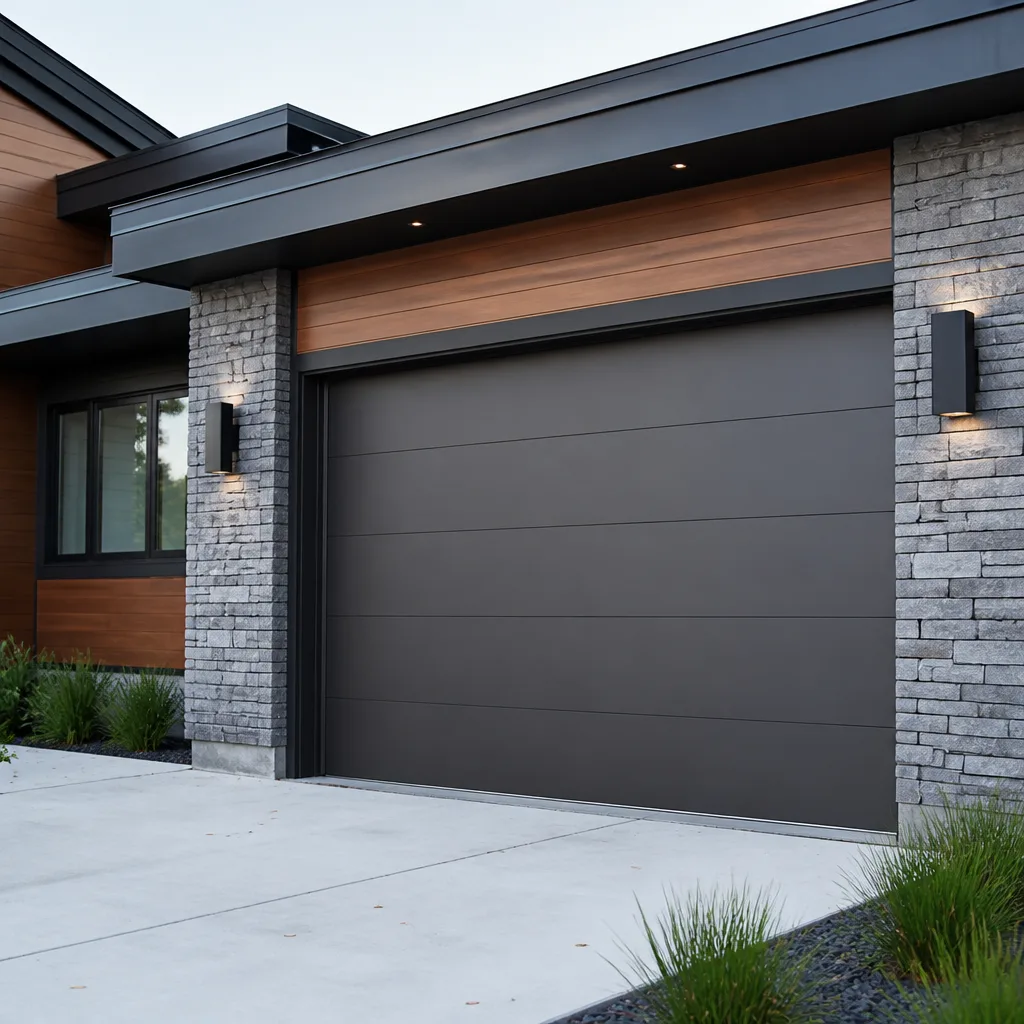 Modern flush
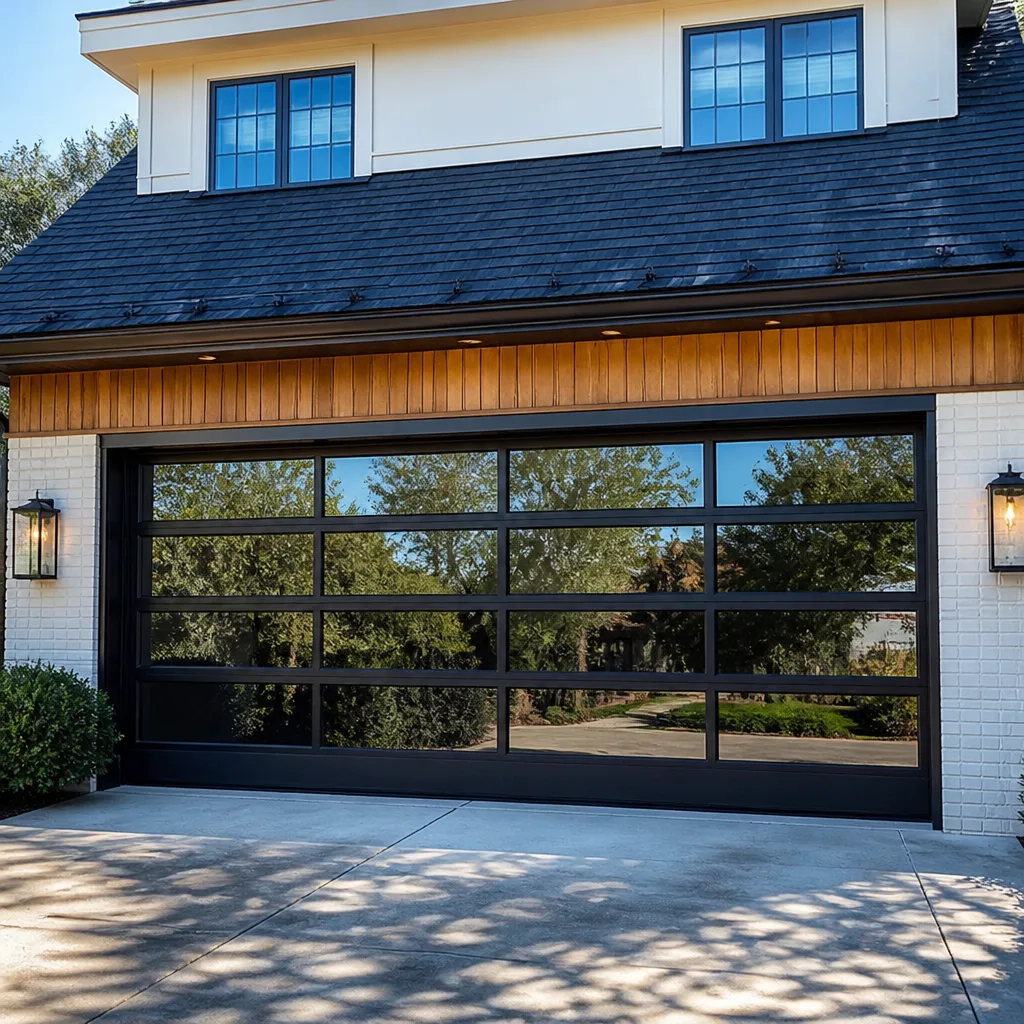 Full-view glass
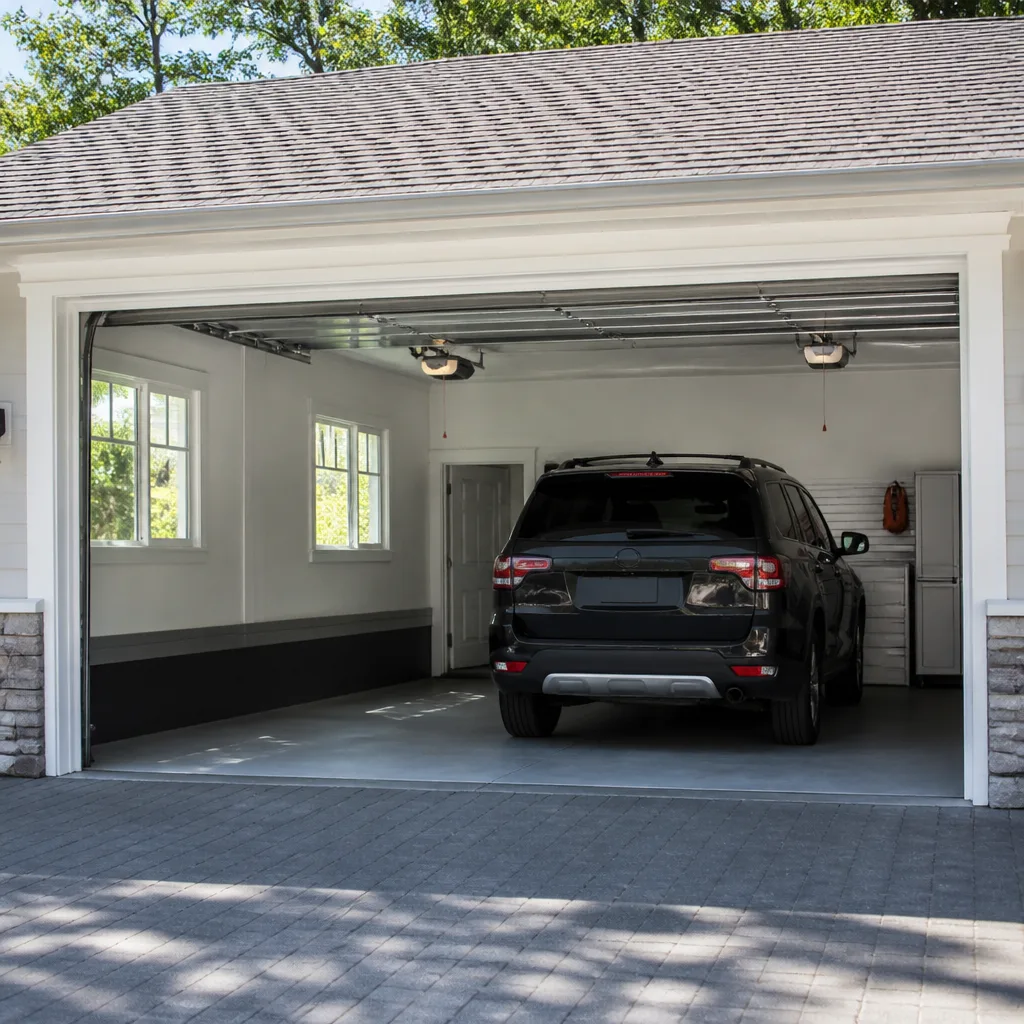 LiftMaster openers
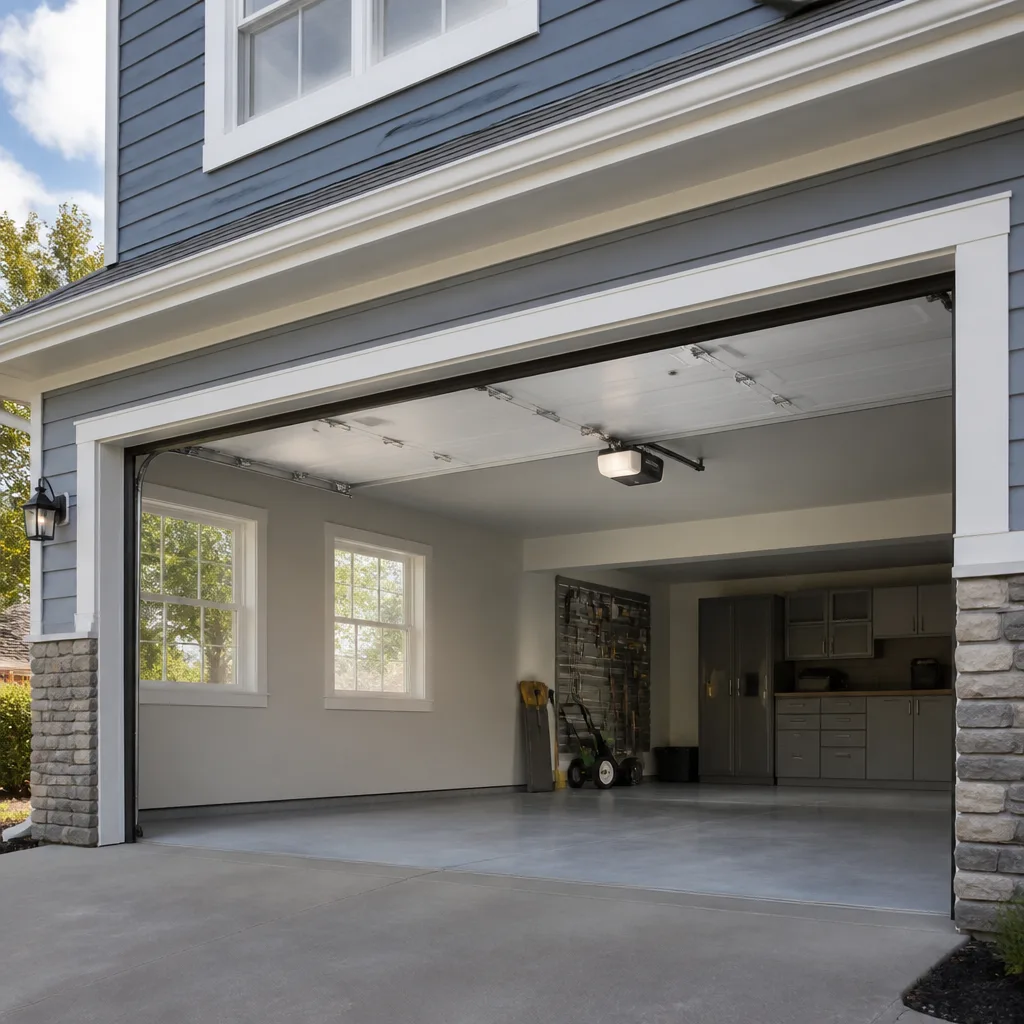 Chamberlain openers
Full 25-point door and opener safety check with every visit - springs, cables, rollers, tracks, and your LiftMaster or Chamberlain opener included
You get a price before we start. It does not change when the pro arrives.
Get your free estimateGarage Door Warning Signs: A Bellevue Homeowner’s Reference Guide
Garage doors rarely fail without announcement. In our experience, they spend weeks telling you something is wrong: a grind that starts at the same spot every cycle, a door that hangs for a beat before it lifts, a hinge that has quietly gone orange with rust. Most homeowners don’t miss those signals because they’re careless. They miss them because nobody ever taught them which sounds and movements mean “watch this” and which mean “stop using the door today.” That gap is what this guide closes. You’ll get a symptom-to-diagnosis map, Pacific Northwest-specific visual checks, a clear safety threshold, and a plain answer to what you can fix yourself versus what needs a technician. If your door is a LiftMaster, Chamberlain, Genie, or Clopay unit, the symptoms read the same way. What changes is the fix.
Quick Answer
In Bellevue, the garage door warning signs that most reliably predict a failure are: uneven or jerky travel, grinding or popping during the first few inches of lift, a door that reverses without an obstruction, visible spring gaps or rust, scraping along the frame, and an opener that runs but doesn’t move the door. Any of these warrant a professional inspection before normal use continues. Signs involving springs, cables, or the door dropping are stop-using-immediately. Our technicians have up to 14 years of experience and can tell you in minutes whether your symptom is a tune-up item or a repair.
Styles & brands we work with
- Raised-panel steel
- Carriage house
- Modern flush
- Full-view glass
- LiftMaster openers
- Chamberlain openers
Table of Contents
- What Do the Sounds Mean? A Symptom-to-Diagnosis Map
- Monitor, Schedule, or Stop: The Urgency Tiers
- Visual Warning Signs in Bellevue’s Climate
- Opener Behavior as a Diagnostic Signal
- Which Signs Suggest a DIY Fix, and Which Require a Technician
- Seasonal Rhythms: When Garage Doors Fail in Bellevue
- A 10-Point Inspection Checklist You Can Do Today
- Common Mistakes to Avoid
- When to Call a Professional
- Frequently Asked Questions
What Do the Sounds Mean? A Symptom-to-Diagnosis Map
Sound is the earliest diagnostic signal a garage door gives you. A closed door can look fine and still be on its way to a failure. The key is that sounds get consistent before they get loud. A single scrape might be a branch or a piece of grit. A scrape that happens at the same height on every cycle is a mechanical problem finding its voice.
- Grinding during the first few inches of lift. Usually a dry or worn torsion shaft, a binding bearing plate, or a drum that is wearing into its cable. This is a “monitor it” symptom early, then a “schedule a repair” symptom within a week or two.
- Loud popping or banging, especially at one specific moment in travel. The single most serious sound on a garage door. Popping under load can indicate a cable about to come off its drum or a spring that is about to fail. Stop using the door and call. Do not try to look at the spring or cable yourself.
- Scraping metal on metal at the frame. The door is rubbing the track or the frame. Left alone, it will wear through the finish and eventually gouge the panel. Moderate urgency.
- High-pitched squealing or squeaking. Usually a lubrication problem at the hinges, rollers, or the opener’s rail. Low urgency, but worth fixing because the friction accelerates wear.
- Humming opener with a still door. The motor is running but the door isn’t. On a chain-drive LiftMaster or Chamberlain unit this is usually a stripped gear or a broken spring. If it’s a spring, the door will feel impossibly heavy if you try to lift it by hand. Don’t try. Call.
- Clicking repeatedly before the door moves. Often a wall control, remote, or safety-sensor issue, not the door itself. Low urgency, easy to diagnose.
Bellevue has a mix of older single-family homes in neighborhoods like Crossroads and newer construction toward Redmond and Bellevue’s east side, and the two age differently. Older doors tend to fail at their hinges and rollers first; newer doors tend to fail at the opener or the springs. We already know your system, so a technician can usually confirm from the sound alone which direction to look.
Monitor, Schedule, or Stop: The Urgency Tiers
Most garage door guides refuse to draw a line between “wait and see” and “don’t touch it.” That line is one of the most useful things you can learn. We sort every symptom on a job into three tiers.
Tier 1 – Monitor. A single squeak that isn’t consistent. A slightly slower lift on the coldest mornings. A remote that occasionally needs a second press. These are watch items. Note them on your phone. If the same sound shows up three times in a row, move up to Tier 2.
Tier 2 – Schedule a repair this week. Consistent grinding, scraping, or squealing. Visible rust at a hinge. A door that hangs for a beat before opening. A safety sensor that triggers a reversal from sunlight. A door that lifts but has stopped opening all the way. Nothing is likely to drop on anyone, but the underlying part is wearing, and a small repair now avoids a bigger one later.
Tier 3 – Stop using the door immediately. This tier is not negotiable, and it’s where general handyman advice fails people.
- The door flies up faster than usual, or closes and then reverses without a sensor trigger.
- A spring is visibly broken (a clear gap in the coil), rusting through, or stretched.
- A cable is frayed, hanging slack, or has come off its drum.
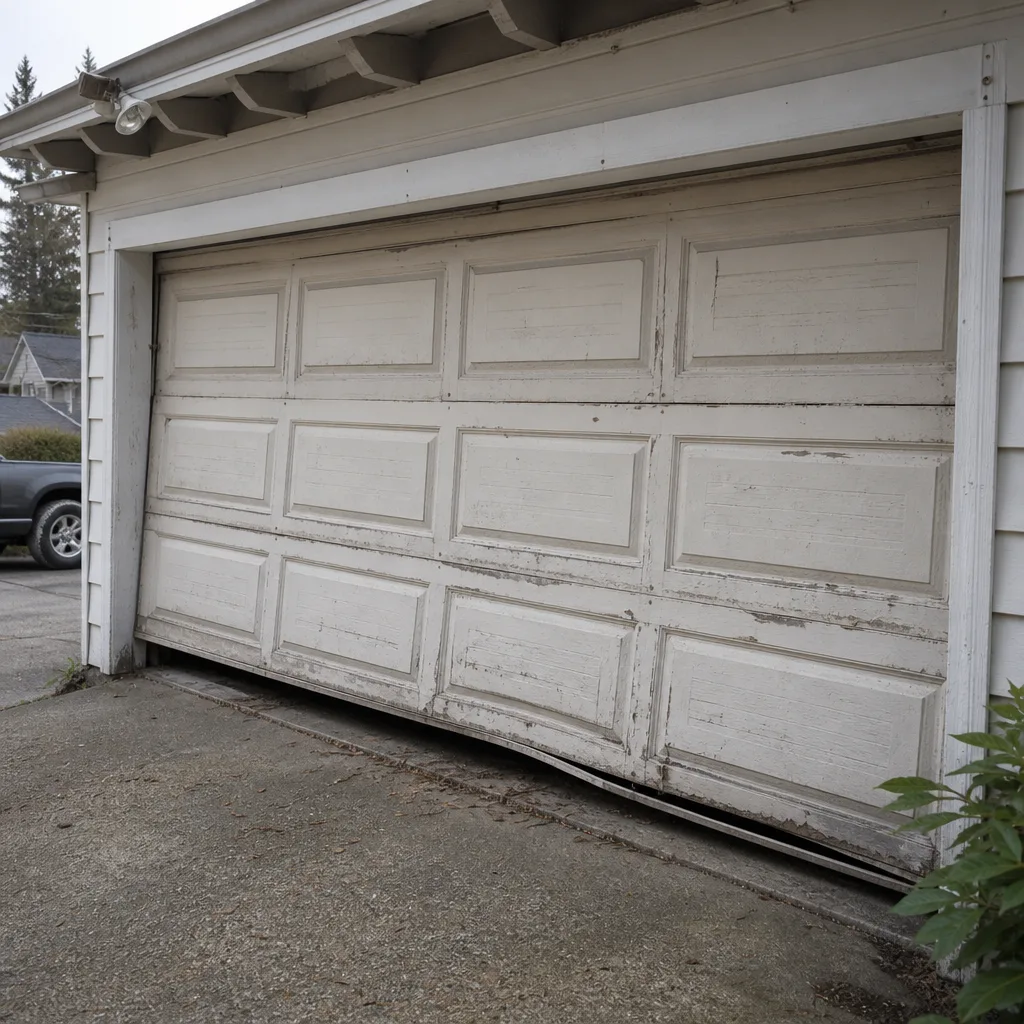
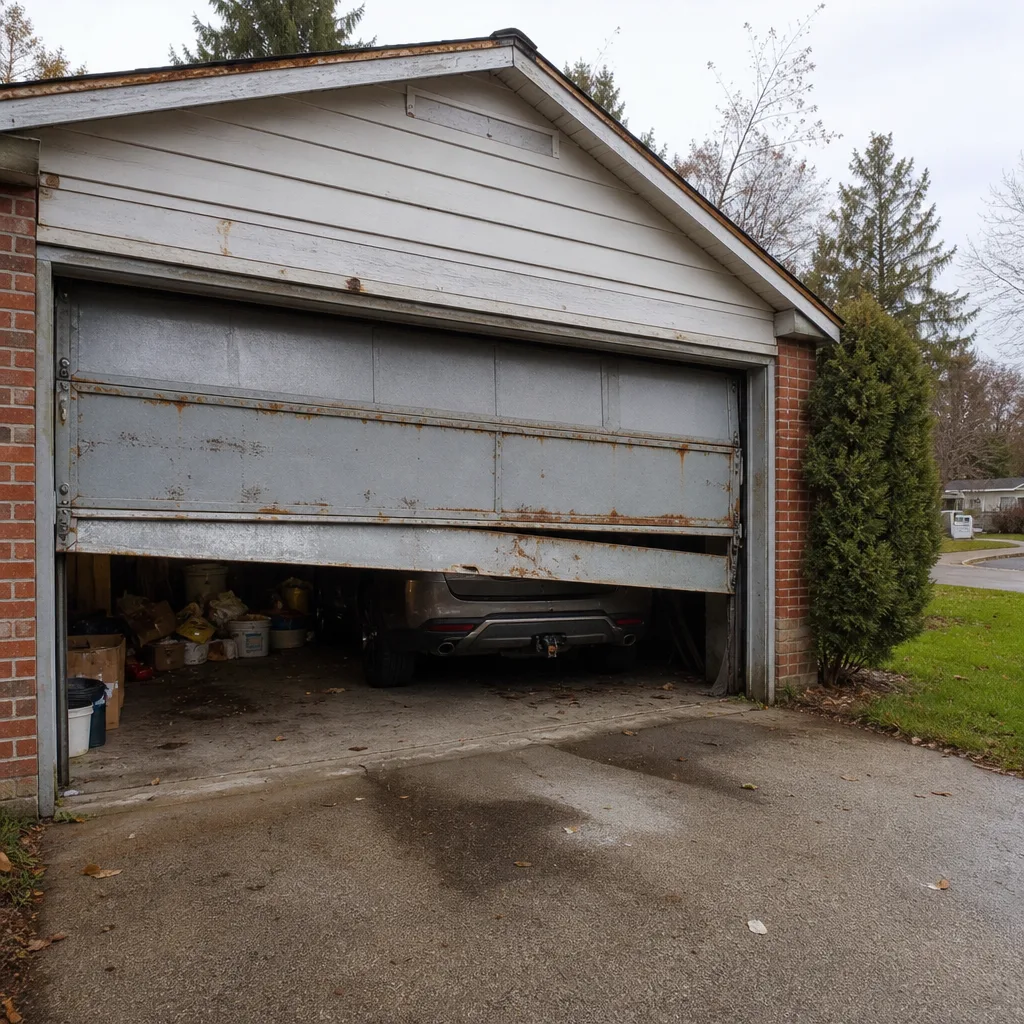
- The door is hanging visibly crooked, or one side is noticeably higher than the other.
- Any loud bang followed by a door that won’t lift.
If you see any of these, pull the manual release only if the door is fully down and outside is clear, then leave it alone. Torsion and extension springs on a residential door are under very high tension, and the energy stored in a winding spring can cause serious injury even to someone who is being careful. Call a professional. If you need garage door repair urgently, we coordinate same-day visits for Tier 3 symptoms in Bellevue.
Visual Warning Signs in Bellevue’s Climate
Visual signs on a garage door read differently in Bellevue than they do in a dry climate. Our damp winters, long cool springs, and warm dry summers push wood, steel, and rubber seals in specific directions. What rusts here and what rots here follows a pattern you can learn to spot.
- Rust that starts at the bottom edge and hinges from below. Steel doors in Bellevue rust from the bottom up, never the top down, because the bottom edge sits closest to splash from driveway runoff. If the bottom panel is orange-brown along its seam while the rest of the door looks clean, that panel is wicking water. It’s an early-call symptom, not an emergency.
- Rust around a single hinge half a panel up. Points to a damaged seal above that hinge letting water past. The hinge isn’t failing; the weather seal is. Replace the seal before the hinge seizes.
- Swollen wood on composite and wood-look doors. Bellevue’s wet winters can swell wood-framed sections by enough that the panel binds against the track. If your door’s lower section is catching on one side during the last foot of travel, look at the bottom edge for swelling before assuming the track has shifted.
- Rubber weather seal that has gone hard or crumbly. The bottom seal on a door in Bellevue typically loses flexibility within a few seasons of temperature cycling. A rough-textured seal lets in water, which starts the rust and swelling cycle above. It’s an inexpensive repair that prevents an expensive one.
- Bubbling or blistering paint on a steel panel. Usually the first visible stage of rust that is forming underneath. If you can pop the bubble with light pressure and see brown, the panel is compromised.
- A visible gap in the torsion spring coil, or a spring that has lost its shape. This is Tier 3. Leave it and call us.
We’ve seen exactly this set of patterns across Bellevue doors for years. If you want a specialist to look at your visual signs rather than guess, Bellevue Garage Door Repair Co can send a technician to read them properly and give you a written estimate before any work starts.
Opener Behavior as a Diagnostic Signal
Your opener is not just the motor that lifts the door. It’s a diagnostic tool, and most people never read it. Every modern opener – whether it’s a legacy Craftsman unit, a Genie Aladdin, or a LiftMaster or Chamberlain myQ-enabled system – is reporting on the door’s mechanical state through how it behaves. Here’s how to decode it.
- The door reverses without an obstruction. On a well-adjusted opener this means the safety reverse is doing its job for the wrong reason. The likely cause is binding in the track, a worn roller, or a door that has gotten heavier than the opener’s force setting allows. Lifting force is set too high or too low. Either way, the door is fighting something. It isn’t the sensor’s fault, and unplugging the sensor is dangerous, not a fix.
- The door moves slower than usual. Slow travel on a chain-drive Chamberlain or LiftMaster often means the opener’s motor is straining against a heavier door – usually a spring that has lost tension but hasn’t fully failed. Speed is a leading indicator of spring wear.
- The opener runs but the door barely moves or doesn’t move at all. On belt-drive units this is usually a stripped gear inside the housing. On any drive type, check the obvious first: the manual release may have been pulled and not re-engaged. If the release is engaged and the door still doesn’t rise, don’t force it. Call.
- Remote or wall button works intermittently. Usually a battery, a wall-control wiring, or an antenna issue. If you have a myQ or Genie Aladdin system and the app disconnects while the wall button keeps working, it’s the connected module, not the door.
- The door stops halfway up on every cycle. Travel limits drifted, or the opener is hitting a force threshold because the door is binding. Rotate this into Tier 2. Don’t keep cycling it; you’re accelerating wear on the opener gears.
If your opener’s behavior is on this list, we can help – our garage door opener repair covers both legacy units and smart-home systems, so we’re not guessing at which brand and generation you have.
Which Signs Suggest a DIY Fix, and Which Require a Technician
Most garage door problems fall cleanly into one of two buckets: safe to handle yourself, or hands-off until a technician arrives. Getting this wrong in either direction is what causes injury, and it’s what causes well-meaning homeowners to create a bigger repair out of a smaller one.
Reasonable to handle yourself, with care:
- Lubricating hinges and rollers with a garage-door-rated lubricant.
- Cleaning the safety sensor lens and checking that its LED is lit.
- Tightening loose bolts on the hinges and the opener’s mounting bracket.
- Replacing a remote battery or re-pairing a remote to the opener.
- Straightening a track that has been nudged out of alignment by a bump – and only if the door is fully down and the track isn’t part of the spring assembly.
Requires a technician:
- Any spring work, on either torsion or extension systems. This is the core reason we treat spring repair as a specialized service rather than a general repair. The spring stores the energy that lifts the door; releasing it incorrectly can cause serious injury. There is no safe amateur method for winding or unwinding a torsion spring without the correct tools and training.
- Cable replacement or re-seating. Cables are under the same tension as the door and can snap back with force if mishandled.
- Replacing a bottom panel or a full door section – the panel has to be balanced against the springs, or the door will operate unreliably and the opener will strain.
- Replacing an opener, or recalibrating a myQ or smart-home integrated opener after a motor replacement.
- Any symptom on the Tier 3 list.
If your door is a Clopay or Amarr with a damaged section that is still under its original warranty, section replacement needs to happen the right way or the warranty is compromised. That’s a specialist job, not a weekend project. If replacement is genuinely the right call rather than repair, our garage door installation team handles the measure, order, and installation through the same company – and if repair is the better answer, we’ll say so.
Seasonal Rhythms: When Garage Doors Fail in Bellevue
Garage door failures in Bellevue have a rhythm. Understanding when your door is most likely to give you trouble helps you read symptoms in context, and it helps you decide whether a sound is a one-off or a pattern.
Late fall into winter. Bellevue’s wet season starts ramping in October. This is when bottom seals and weather stripping fail, when rust starts at the lower panel edges, and when swollen wood panels begin to bind. It’s also when doors that have been slowly losing spring tension become noticeably slower on cold mornings. Spring steel gets less elastic in cold, and a spring that’s been working with a slight loss of tension can finally cross the line into failure.
Mid-winter. The heaviest rain months. Water intrusion at the bottom seal is at its worst. Driveway drainage that backs up to the door opening can wick into the bottom panel and start the rust cycle early. If you notice water spots inside the garage after heavy rain, that seal is the next thing to check.
Spring. Doors that sat through the wet months reveal what winter did to them. Seals that rotted and don’t re-seal. Hinges that have lost their finish. Springs that have been weakening through the cold and now show a visible gap. Spring is when we see the most Tier 2 and Tier 3 calls come in during a short window.
Summer. Warm, dry, and easier on the door mechanically, but heat expands rubber seals that have already hardened and accelerates roller wear. If your door is running smoothly all summer but suddenly gets noisy in October, that’s the seasonal shift, not a new problem.
None of this is unusual, and none of it means your door is badly built. It means a Bellevue door needs its seals, hinges, and springs checked on a schedule rather than after a failure. That’s the whole point of reading the signs.
A 10-Point Inspection Checklist You Can Do Today
This is a safe, non-technical inspection. Do it with the door fully closed and the opener unplugged or disconnected.
- Look at the spring above the door. Is there a visible gap in the coil, or rust that has progressed to bare metal? If yes, stop. Do not run the door. Call.
- Look at the cables. Are they frayed, stretched, or slack? Any of those is Tier 3.
- Run your hand along the bottom weather seal. Is it flexible, or has it gone hard and crumbly?
- Check the bottom panel edge for rust. A brown seam at the very bottom is an early-call symptom.
- Test the balance. With the door about waist-high, disconnect the opener and let go gently. A properly balanced door stays put. A door that drops or rises on its own has unequal spring tension and needs a technician.
- Check the hinges for play. A hinge that wiggles by more than a few millimeters is worn.
- Look at the track for dents or misalignment, especially at the lowest panel where a car bumper might have touched.
- Test the safety reverse. With the door in motion, pass a piece of wood or a shoe box across the sensor beam. The door should reverse on contact.
- Listen on a full cycle. Repeat the cycle three times. Any sound that happens all three times is a real symptom; a one-off is a grease or a branch.
- Check the opener’s wall control. Does the light flicker, or does the opener hesitate before responding? That’s an early sign of a wall-control or wiring issue.
If anything on this checklist reads as Tier 2 or Tier 3, get a professional on it rather than testing the door again. Our technicians have up to 14 years of experience and can run this same checklist in a few minutes with the correct tools.
Common Mistakes to Avoid
- Assuming a newly noisy door is just “worn.” Every failure we’re called to had a sound that predated it. A grind that appears on every cycle is the door telling you a component is on its way out. Lubrication helps some sounds, but it doesn’t fix a bearing.
- Ignoring rain intrusion after a heavy storm. Bellevue’s wet winters mean a bad bottom seal is not a cosmetic problem. Water reaches the bottom panel edge and starts the rust cycle that ends in a full panel replacement. Replace the seal.
- Forcing a door that reverses or stops halfway. Every cycle you run on a binding door wears the opener gears further. One more cycle usually adds a repair you didn’t need.
- Replacing the opener when the spring is the problem. A door that suddenly feels heavy enough that the opener struggles is almost always a spring issue. A new opener on a failing spring will fail faster than the old one.
- Disconnecting the safety reverse “because it kept triggering.” Never a fix. It’s a symptom of a door that is off balance or a sensor that needs realignment.
- Trying to wind or unwind a torsion spring without the right tools and training. This is the single most common preventable injury on a garage door. Spring repair is not a homeowner repair.
- Calling for a replacement before a repair has been properly evaluated. A repair-first orientation is what most doors actually need. We install when replacement is genuinely the right call, not before.
When to Call a Professional
Call a professional if any of the following describe your door right now: a visible gap or rust-through in a spring, a frayed or slack cable, a door that lifts crooked, a door that dropped or reversed without a sensor trigger, and any loud bang followed by a door that won’t lift. Those are Tier 3 and should not wait.
Also call if you’re sitting on a Tier 2 symptom that has lasted more than a week – consistent grinding, scraping, squealing, a sluggish lift, or a visible rust line at the bottom panel – because “monitor it” has an expiry, and the cost of a small repair now is always less than the cost of a big one later. Our technician can usually tell you within a few minutes of the door being in front of them whether it’s a tune-up or a repair.
Bellevue Garage Door Repair Co offers free estimates in Bellevue – call (877) 541-3559. Same-day service is available for Tier 3 symptoms, dispatch runs from 7am to 7pm, and the price is agreed in writing before any work starts. If you’re not sure whether your door is Tier 2 or Tier 3, call and describe the symptom. That conversation costs nothing.
Frequently Asked Questions
The most reliable early sign is a consistent sound that happens every cycle – usually grinding during the first few inches of lift. A one-off squeak is often just dry hinges, but a grind that shows up on every open is a component wearing down. If you hear it, get it looked at before it turns into a louder symptom. Call (877) 541-3559 for a free estimate.
A torsion spring that’s approaching failure usually shows one of three things: a slight gap appearing in the coil, rust progressing to bare metal, or a door that suddenly feels noticeably heavier or lifts more slowly. Any of those is Tier 3 – stop using the door and call. Never try to inspect the spring by lifting or winding it yourself. Springs are under high tension and cause serious injury when handled without the correct tools.
Spontaneous reversal in Bellevue is usually one of three things: the safety sensors are being triggered by low winter sunlight or by a misaligned lens, the door is binding enough that the opener’s force setting trips, or the opener’s travel limits have drifted. Don’t disconnect the sensors. If the reversal happens without an obstruction and the sensors look clean, that’s a door balance issue and needs a technician. Call (877) 541-3559.
The Bellevue-specific signs are rust at the bottom panel edge, a bottom seal that’s gone hard or crumbly, swollen wood or composite at the lower section, and hinges that rust around one half because a seal above them is leaking. Our wet winters and cool springs push doors in these directions more than dry climates do. A moisture-driven rust line is caught early, it’s a cheap repair; caught late, it’s a full panel.
Lubricating the hinges and rollers yourself is fine and genuinely helpful. If the squeak comes back within a month, or if you also hear scraping or popping, that’s not a lubrication problem and a technician should look at it. Anything involving springs, cables, or a door section should be left to a professional. Estimates are free, so there’s no cost to having it checked. Call (877) 541-3559.
The door, almost always. A door that moves slower than usual usually has a spring that’s losing tension, or a track that’s binding. Replacing the opener doesn’t fix that. If your LiftMaster, Chamberlain, or Genie opener hums but the door barely moves, weight is the signal – not a worn motor. Call (877) 541-3559 and we’ll diagnose the door before anyone suggests replacing the opener.
The Bottom Line
Garage door failures telegraph themselves. The sounds are consistent, the rust patterns follow Bellevue’s seasons, and the opener’s behavior reads like a status readout if you know what to look for. The three-tier system is the whole guide in short: monitor the small stuff, schedule a repair on the consistent stuff, and stop using the door the moment a spring, cable, or balance issue shows up. Spring and cable work belongs to a trained technician, always. Reading your door’s signs is one afternoon of learning that saves you an emergency call. Repair first; replace only when repair is genuinely not the answer. If you want a technician to read the signs for you, we’ll come look. Estimates are free, the price is agreed before any work starts, and our technicians have up to 14 years of experience across LiftMaster, Chamberlain, Genie, Clopay, Amarr, Wayne Dalton, Craftsman, and Raynor systems.
Call (877) 541-3559 for a free estimate in Bellevue.
Written by the team at Bellevue Garage Door Repair Co.
See the difference
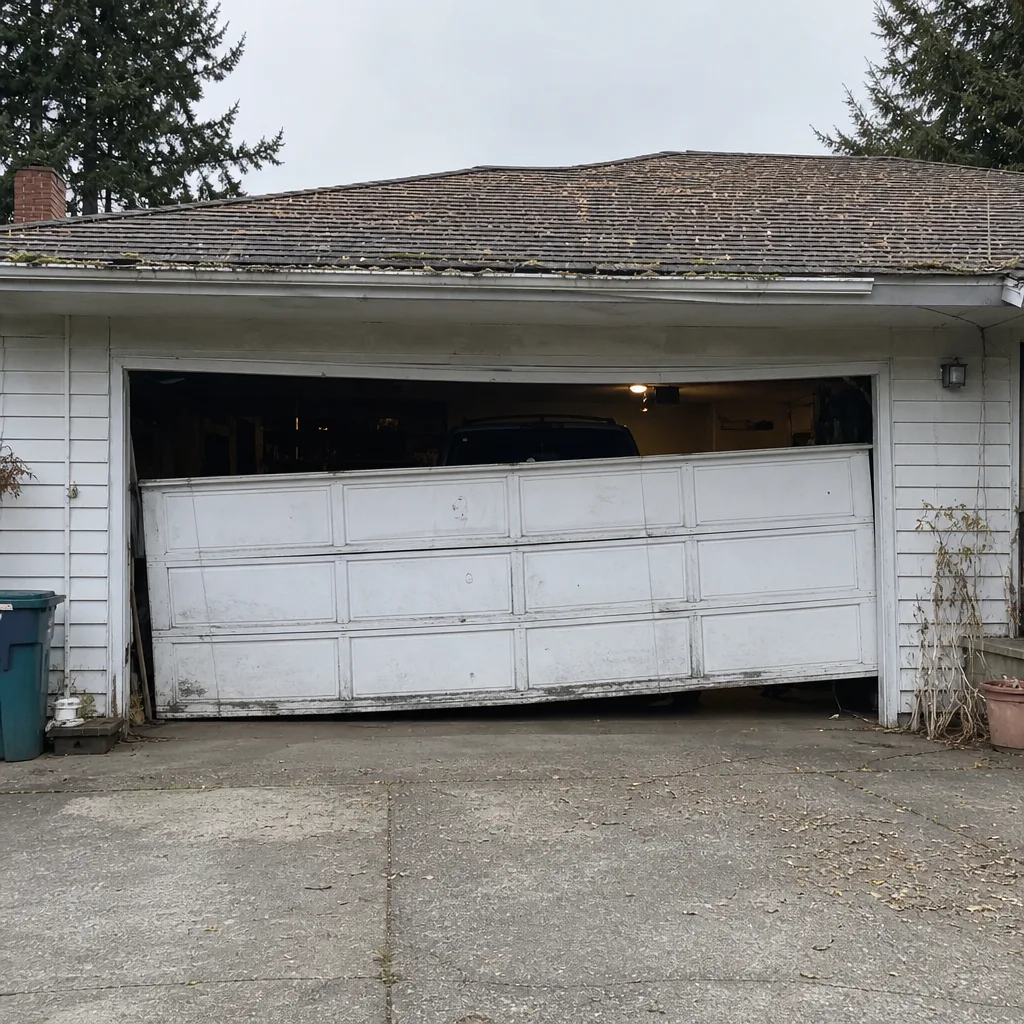 Before
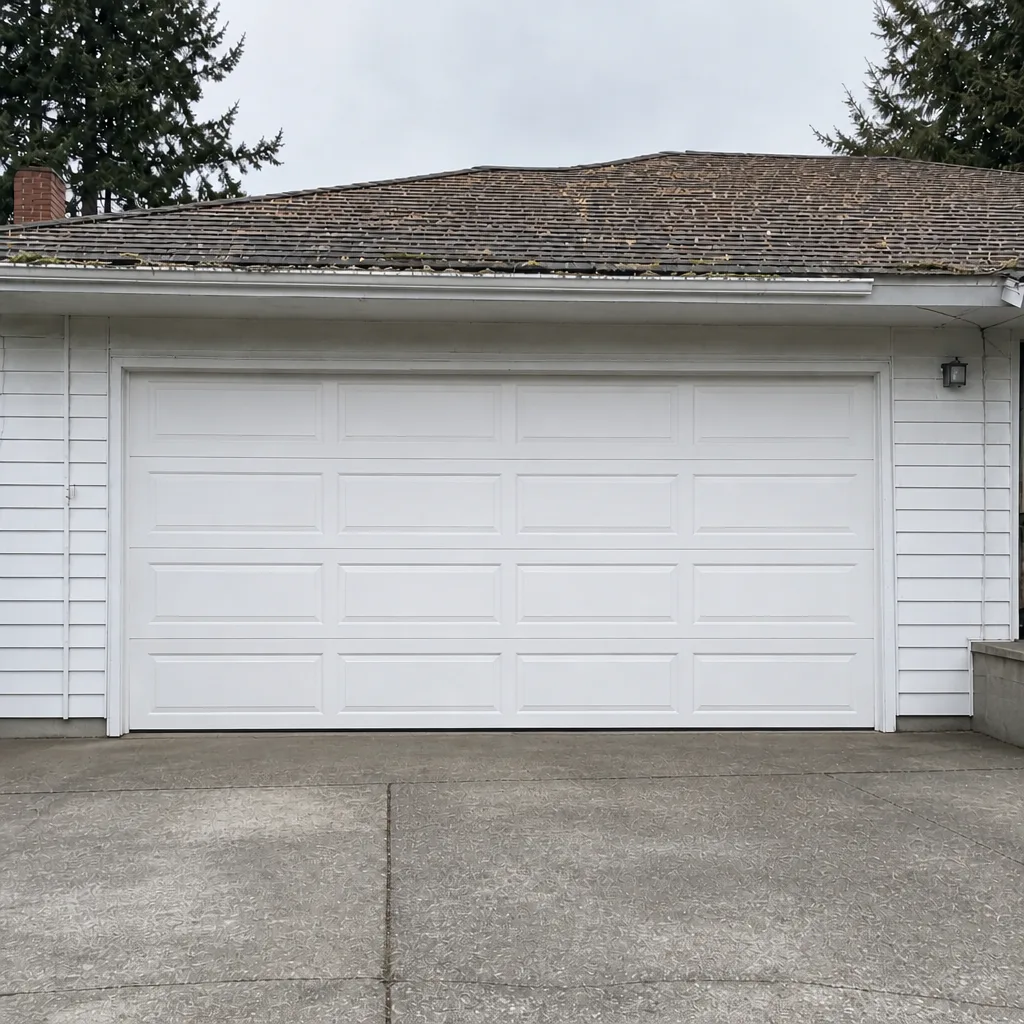 After
 Before
 After
 Before
 After