Last updated November 20, 2026
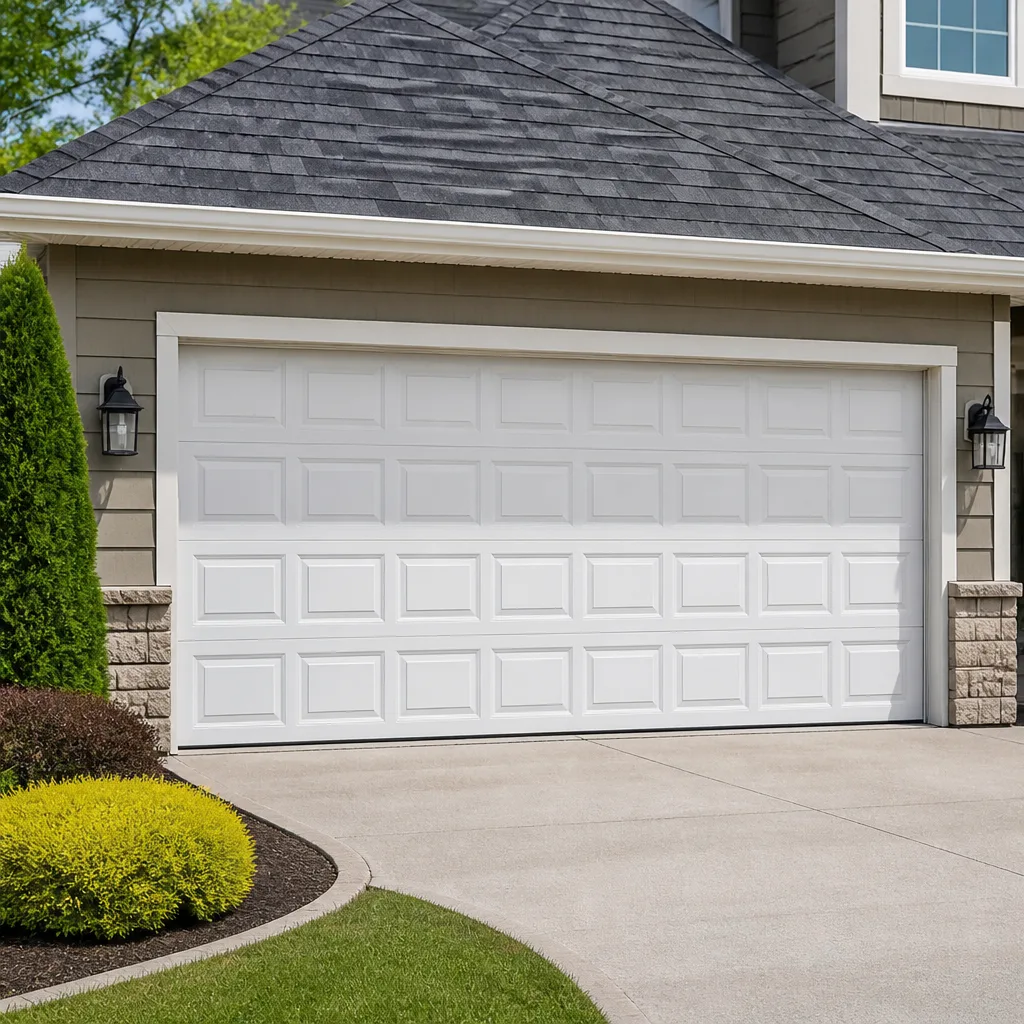 Raised-panel steel
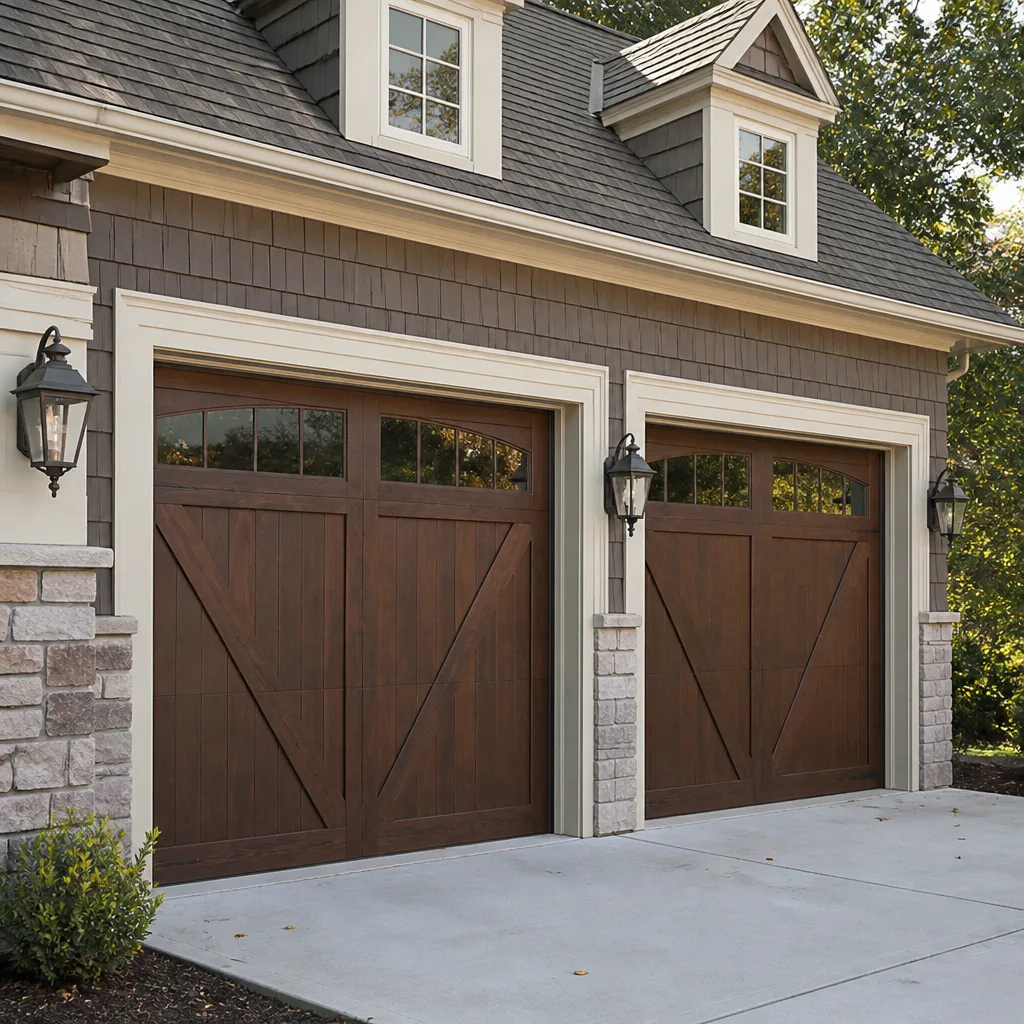 Carriage house
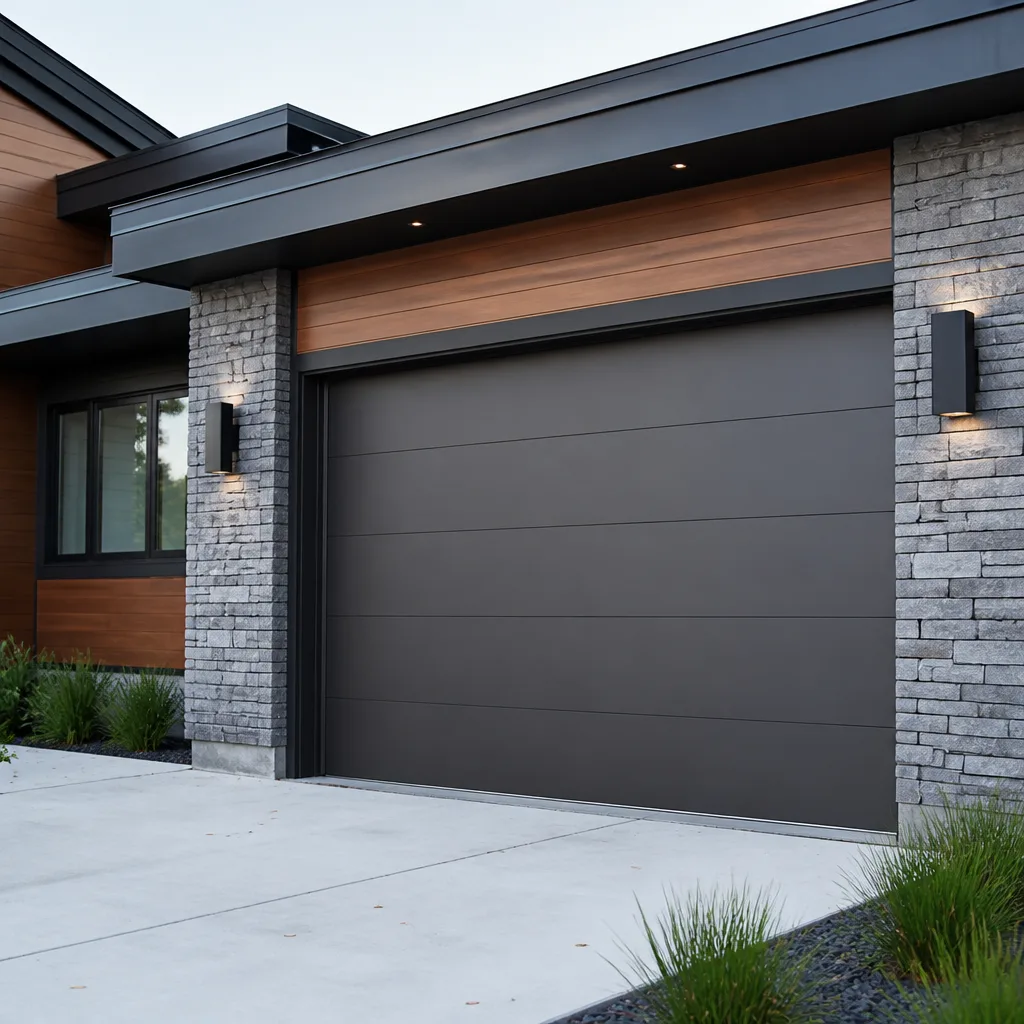 Modern flush
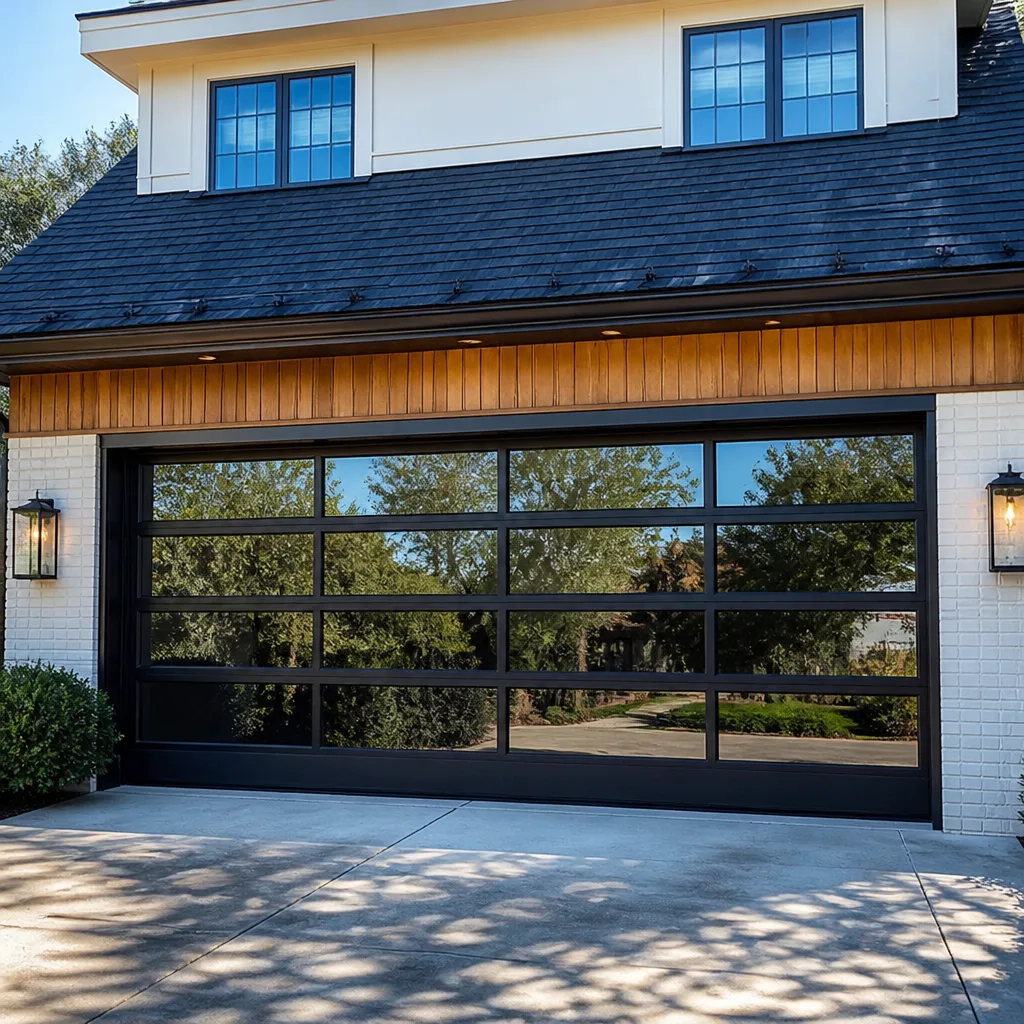 Full-view glass
 LiftMaster openers
 Chamberlain openers
Full 25-point door and opener safety check with every visit - springs, cables, rollers, tracks, and your LiftMaster or Chamberlain opener included
You get a price before we start. It does not change when the pro arrives.
Get your free estimateGarage Door Permits, Codes & Inspections in Bellevue, WA: What You Need to Know
Most Bellevue homeowners assume that swapping a garage door is permit-free. Often they’re right, and that’s the problem. The exceptions in the city’s municipal code are narrow enough that people skip the check, and specific enough that skipping it can slow a home sale or leave you holding a code violation. This guide walks through exactly when the Development Services Department wants a permit, how Washington’s energy code treats an insulated replacement, where HOA approval fits in, and what actually happens if an inspection fails. Read it before you order a door.
Quick Answer
In Bellevue, a straight like-for-like garage door replacement on a one- or two-family home usually doesn’t need a building permit, but a new opening, an enlarged opening, a structural change to the header or framing, or a door that changes the garage’s envelope performance can trigger one. Insulated door replacements also have to be checked against Washington State’s energy code (WAC 51-11C). The only way to know for certain which bucket your job falls into is to ask the city’s building department before the door is ordered.
Styles & brands we work with
- Raised-panel steel
- Carriage house
- Modern flush
- Full-view glass
- LiftMaster openers
- Chamberlain openers
Table of Contents
- When does Bellevue require a permit for garage door work?
- Replacements, new openings, and structural changes: the three scenarios
- Washington’s energy code and insulated door replacements
- HOA covenants and city permits: which comes first?
- What a failed inspection actually looks like
- How to confirm your contractor is pulling the permit
- Common mistakes to avoid
- Frequently asked questions
When Does Bellevue Require a Permit for Garage Door Work?
Bellevue requires a building permit when garage door work changes the structure, the opening, or the way the garage envelope performs – not when you’re replacing a damaged door with the same size and type in the same opening. That distinction covers the vast majority of residential jobs. A door swap, new springs, new opener, or new track and hardware in an existing opening is typically permit-exempt. A new opening, a widened opening, a structural repair to the header, or a change that affects the thermal envelope is a different story, and the Development Services Department will want plans and an inspection.
It helps to think about what a permit actually does. It creates a paper trail showing that someone with authority reviewed the structural and life-safety aspects of the job. For a garage door, that means the header, the jambs, the framing around the opening, and the attachment of the torsion system to a sound structural member. A permit isn’t about the door itself. It’s about the building around it.
- Usually no permit: same-size replacement in an existing opening, opener swap, spring and cable replacement, track and roller replacement, panel replacement.
- Usually needs a permit: new garage door opening cut into an existing wall, widening or heightening an existing opening, header or framing modification, converting a carport to an enclosed garage.
- Ask the city directly: any time the door size or type changes, any time insulation values change significantly on a heated garage, and any time the garage shares a wall with conditioned living space.
We point every Bellevue customer toward the city’s building department for a definitive answer before we order a custom door. It’s a five-minute call that can save weeks later. Our garage door repair work is nearly always in the exempt category, but installs deserve the check.
Replacements, New Openings, and Structural Changes: The Three Scenarios
The permit question breaks cleanly into three scenarios, and knowing which one you’re in makes the rest of this guide simpler to apply. Here’s how each one usually plays out in Bellevue.
Scenario 1: Like-for-like replacement
This is the most common job. Your existing door is dented, rusted through at the bottom panel, or a spring has failed and the door no longer runs true. You’re replacing one door with another of the same width, height, and type in the same opening, using the same hardware and opener. Almost every jurisdiction in Washington treats this as ordinary maintenance, and Bellevue is no exception. No building permit is normally required. A damaged Raynor or Clopay door swapped for the same model falls here.
What still applies: HOA rules if you have them, and any manufacturer or safety requirements for the new door. The other thing that applies is safety. Springs, cables, and the torsion assembly are high-tension components, and they’re not a homeowner project. We treat spring repair as the safety-critical work it is – a trained technician with proper winding bars and the door properly secured is the only safe way to do the job. That’s not a permit issue, but it’s the reason the door swap isn’t a simple handyman task either.
Scenario 2: A new opening
Adding a garage door where there wasn’t one – converting a solid wall, enclosing a carport, or adding a second bay – is a structural project, not a door project. Bellevue will want a building permit with framing and header details, and the city will inspect the work at the framing stage and again at final. Expect weeks, not days. This is the scenario where homeowners most often get surprised: they budget for a door and a contractor, and then discover the permit, inspection, and structural work add meaningful cost and time.
Scenario 3: Structural modification
Widening an existing opening for a double door, raising the header for a taller door, repairing rotted framing around the opening, or reinforcing a sagging header all land here. These jobs need a permit in Bellevue, and they need engineering or prescriptive details that satisfy the inspector. A garage door technician can handle the door. A licensed contractor with the right permit handles the structure. If your job crosses that line, we’ll tell you plainly rather than pretend we can do work that isn’t ours.
If you’re already planning a replacement, our garage door installation page walks through what a proper measure-and-install looks like. The permit decision should happen before that process starts, not in the middle of it.
Washington’s Energy Code and Insulated Door Replacements
Washington State’s energy code, WAC 51-11C, sets minimum thermal performance requirements for the building envelope, and garage doors are part of that envelope when the garage is conditioned or shares a wall with conditioned space. If you’re replacing an insulated garage door, the new door needs to meet the code’s requirements for the assembly, and the inspector will want to see the manufacturer’s documentation for the door you’re installing. That’s a different conversation from the building permit, but the two intersect: on any job where the envelope is being altered, the city can ask for both.
What this means in practice for a Bellevue homeowner:
- A straight replacement of an insulated door with another insulated door of equal or better performance is usually straightforward. Keep the spec sheet.
- Replacing an uninsulated door with an insulated one is a performance improvement and rarely triggers a code issue – but if the garage is heated, the city may want documentation.
- Replacing an insulated door with an uninsulated one on a conditioned garage almost always raises a flag. Don’t do it without checking first.
Manufacturers including Clopay and Amarr publish thermal performance data for their insulated models, and we can help you compare the spec sheet against what your garage actually needs. The energy code is the reason we ask about your garage’s construction before recommending a door: the right answer for an attached heated garage is different from the right answer for a detached, unheated one.
Washington’s climate is mild but wet, and Bellevue sits in the Puget Sound lowlands where the wet season runs long and temperatures hover near freezing for weeks at a time rather than plunging deep. That’s a moderate envelope load, and it’s the reason a properly insulated door is worth considering on any garage that shares a wall with the house. It’s also the reason to make sure the door you buy documents its performance, because without the paperwork the code question can’t be resolved cleanly at inspection.
HOA Covenants and City Permits: Which Comes First?
HOA approval comes first, then the city permit – always. The reason is simple: the permit process assumes you can actually build what you’ve described, and if your HOA won’t approve the door style, color, material, or size, the permit is wasted. Plenty of Bellevue-area HOAs have architectural review committees that meet on a schedule and want design submittals in advance. Skipping that step and pulling a permit first is one of the most common order-of-operations mistakes we see.
What HOA rules typically govern on a garage door:
- Color and finish. Many covenants specify the door must match the trim, the siding, or a designated palette.
- Material and panel style. Carriage-house, raised-panel, and flush modern styles are treated differently by some associations.
- Windows and glazing. Whether a door can have windows, and what kind.
- Visible hardware. Decorative strap hinges and handles are frequently restricted.
- Door height and width. Occasionally, HOAs restrict oversized doors for aesthetic reasons.
Get the approval in writing before you order a custom door. Custom doors aren’t returnable, and an unapproved door on your house is a covenant violation that has to be remediated at your expense. Bellevue has a wide range of neighborhoods with HOAs – the newer planned communities are more likely to have detailed architectural standards than older established blocks – so the check is worth making before you assume you’re clear.
What a Failed Inspection Actually Looks Like
A failed inspection is not the end of the project; it’s a scheduled correction. The inspector issues a report identifying what didn’t meet code, you (or your contractor) fix it, and you schedule a re-inspection. Re-inspection usually carries a fee, and the timeline depends on how long the correction takes and how quickly the city can get back out. In Bellevue, that can mean days for a simple correction and weeks if the fix involves structural work that needs re-engineering.
The most common garage door inspection failures we hear about:
- Insufficient header or framing around a new or widened opening. The header has to be sized for the span.
- Improper attachment of the torsion system to the structure. A spring assembly anchored to a marginal piece of framing is a legitimate safety failure, not a nitpick.
- Missing or wrong documentation for the door’s thermal performance on a conditioned garage.
- Unsealed penetrations or missing weatherstripping on the envelope – the inspector is checking air sealing, not aesthetics.
- Safety features absent or not functioning on the opener, particularly the photo-eye sensors and the auto-reverse function.
The corrective process is straightforward once you know what’s wrong:
- Read the inspector’s report carefully. It will tell you exactly what failed and usually cite the code section.
- Make the correction, using licensed trades where the correction requires it.
- Document the correction with photos and any new spec sheets.
- Schedule the re-inspection through the city’s online permitting portal.
- Keep the final inspection record – you’ll want it when you sell.
That last point matters more than people expect. An unpermitted or unpassed garage door installation can surface during a buyer’s inspection years later, and retroactive permitting is slower and more expensive than doing it right the first time.
How to Confirm Your Contractor Is Pulling the Permit
The permit should be pulled by the contractor doing the permitted work, in the contractor’s name, not yours. A contractor who asks you to pull the permit as an owner-builder is transferring liability for the work to you, and that’s a serious red flag. In Washington, the licensed contractor doing the work is the one who should be on the permit.
Here’s how to confirm it before work starts:
- Ask who will be listed as the contractor of record. If it isn’t the company you’re hiring, ask why.
- Get the permit number in writing before the work begins. Not “we’ll pull it Monday.” A number.
- Look up the permit in the city’s online portal. You can see the status, the scope, and the contractor attached to it.
- Check the contractor’s registration with the Washington State Department of Labor & Industries. The registration number should match the company on the permit.
- Confirm insurance and bonding before anyone sets foot on the property. Any legitimate contractor will send the certificate without complaint.
A contractor who pushes back on permits – who argues the job doesn’t need one, or who says pulling a permit is a waste of money – is a liability. Occasionally they’re right about the permit classification. More often they’re avoiding the paperwork and the inspection that comes with it. If your contractor’s advice conflicts with what the city tells you, believe the city.
We’re clear with every Bellevue customer about which side of the permit line a job sits on, and we’ll say so in writing. Our technicians have up to 14 years of experience with the doors and openers that go into homes across Bellevue, and we’ve seen what happens when a permit gets skipped. The honest answer is worth more than the convenient one.
See the difference
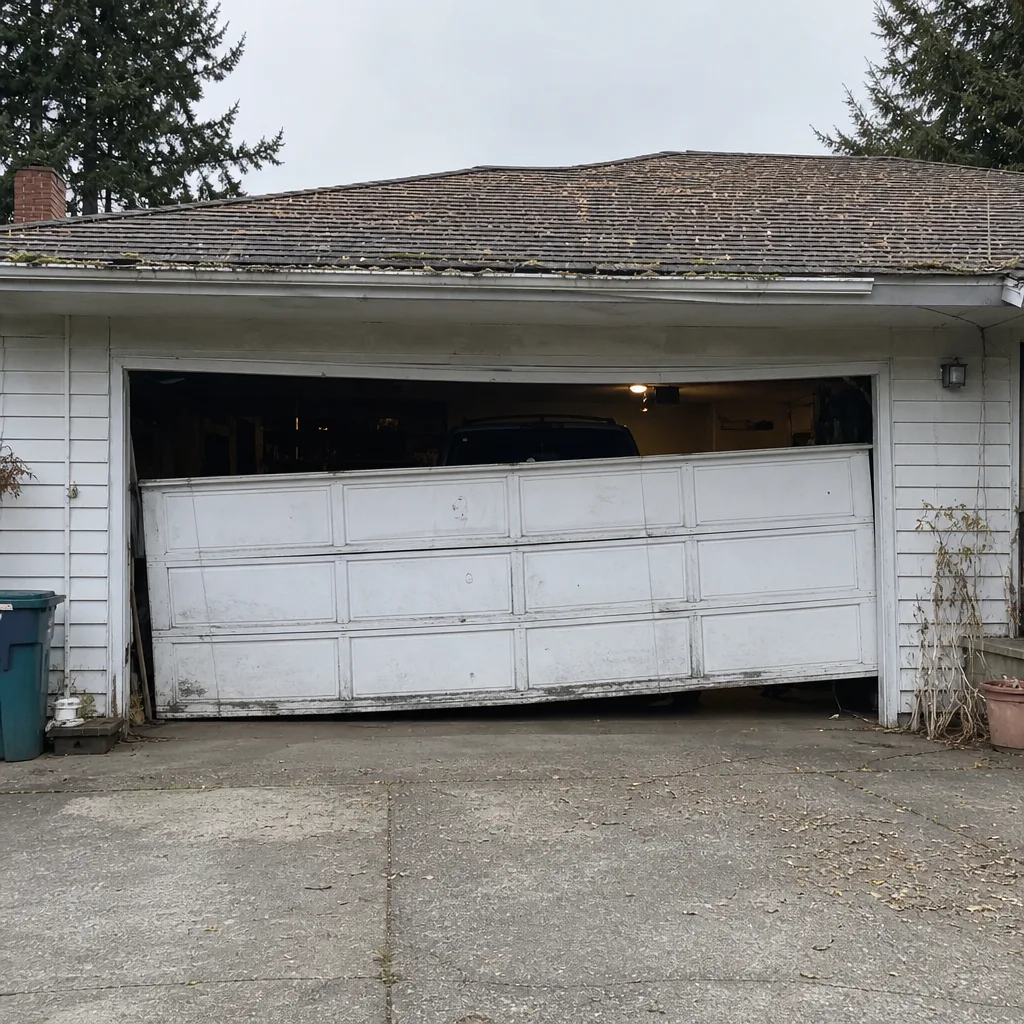 Before
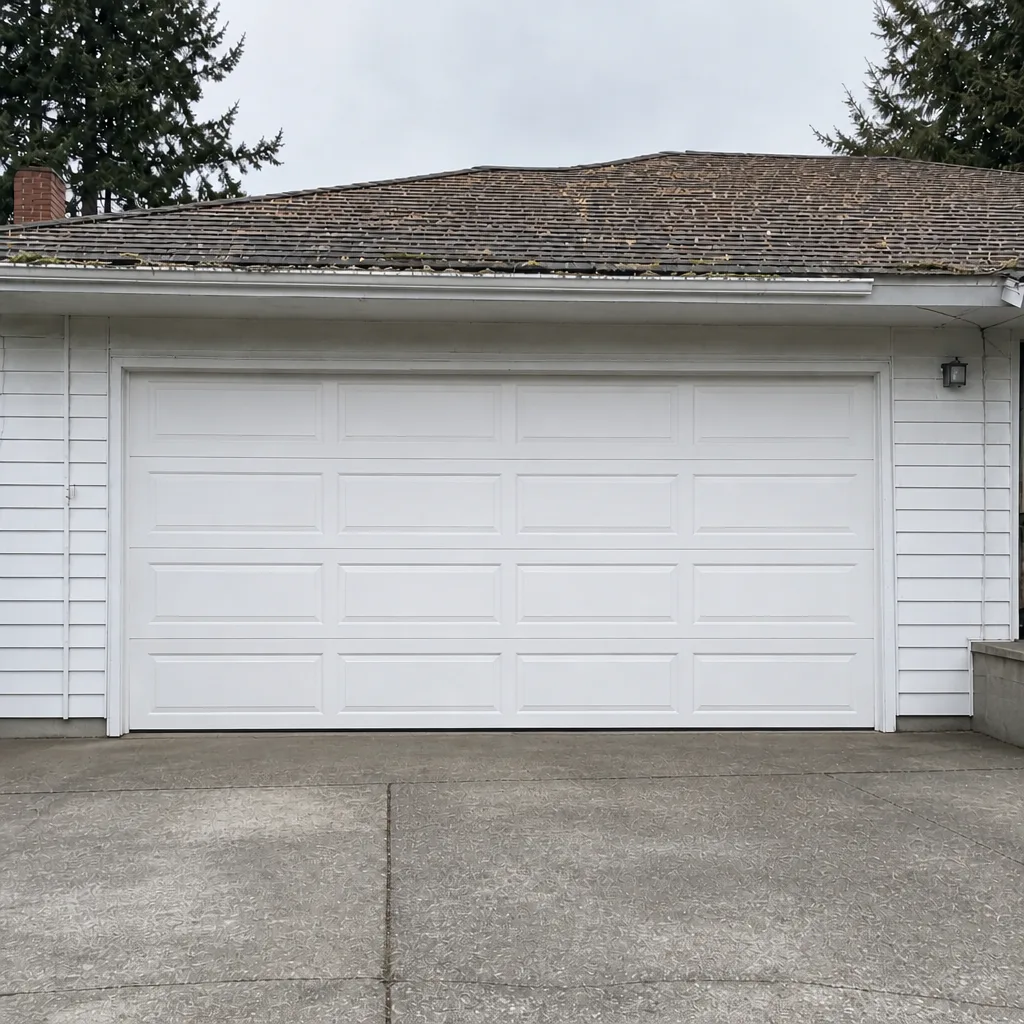 After
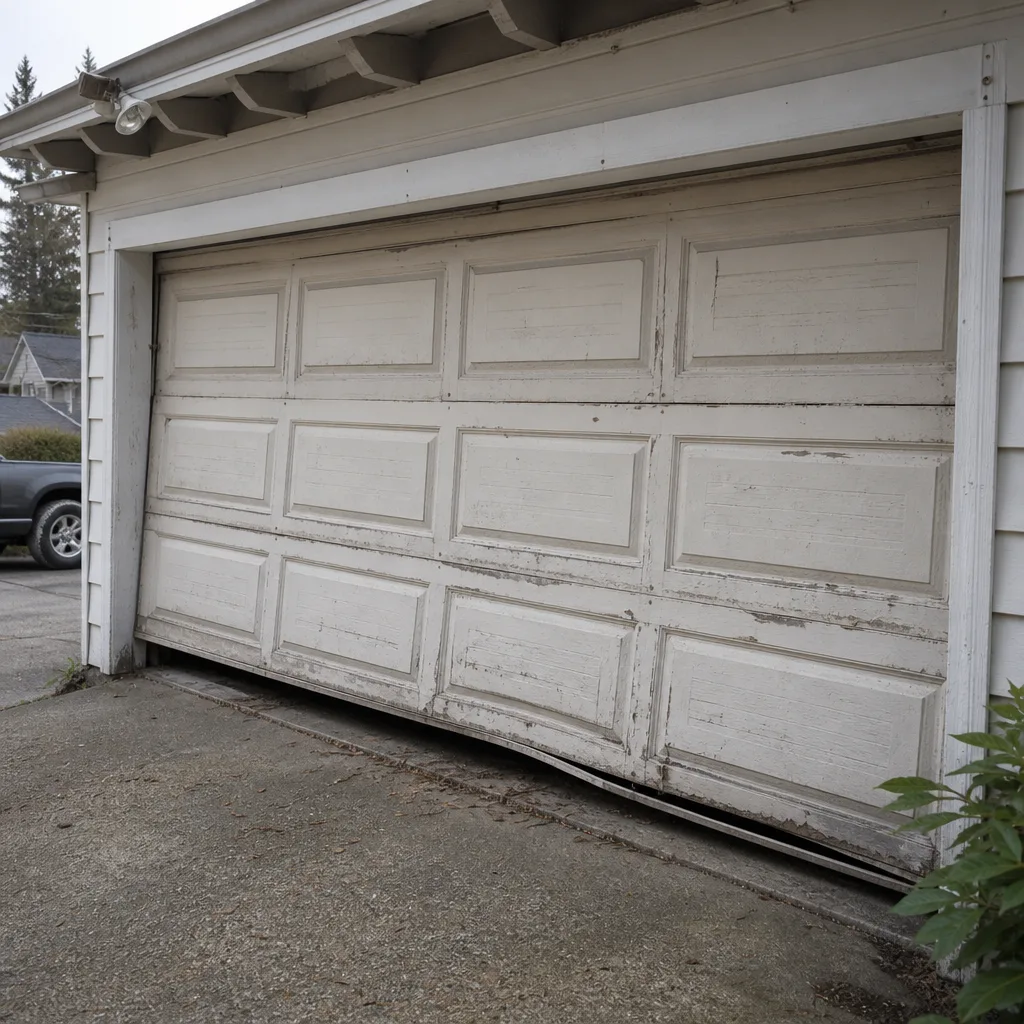 Before
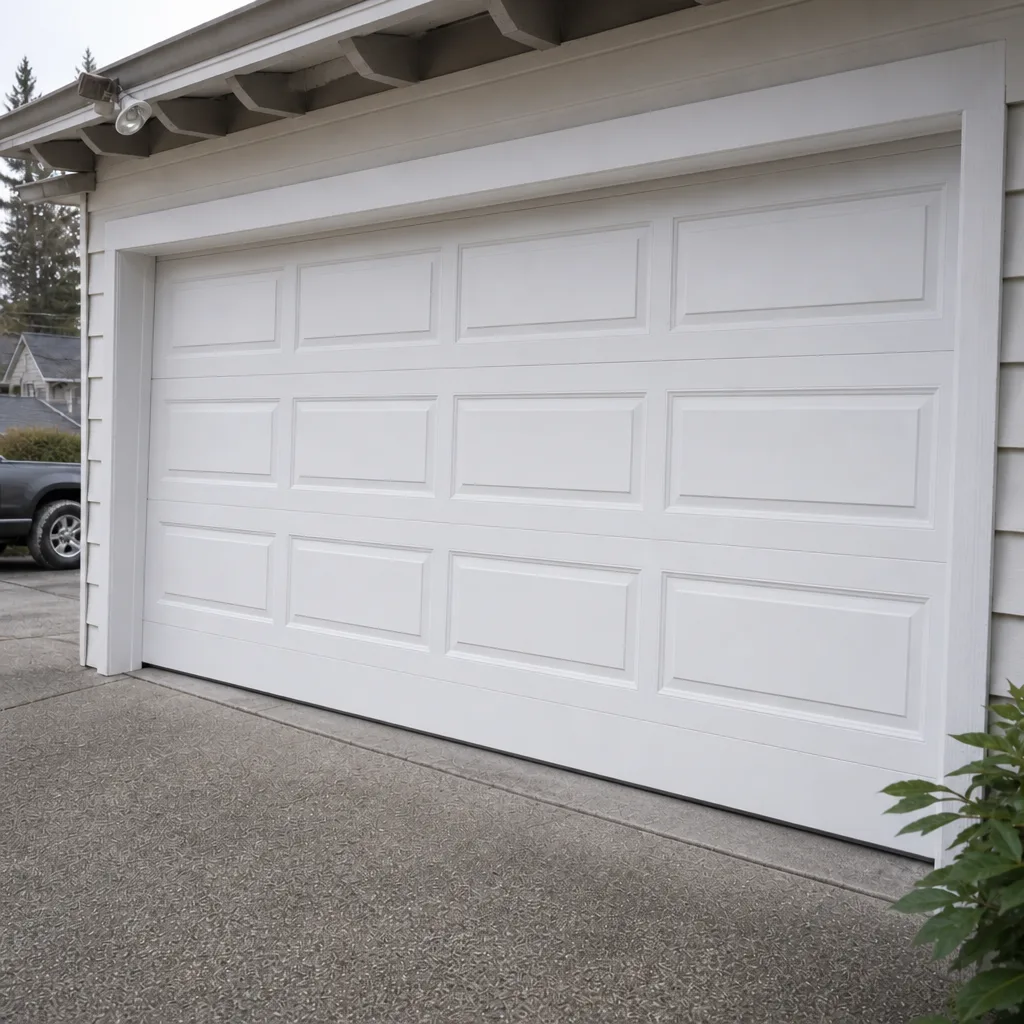 After
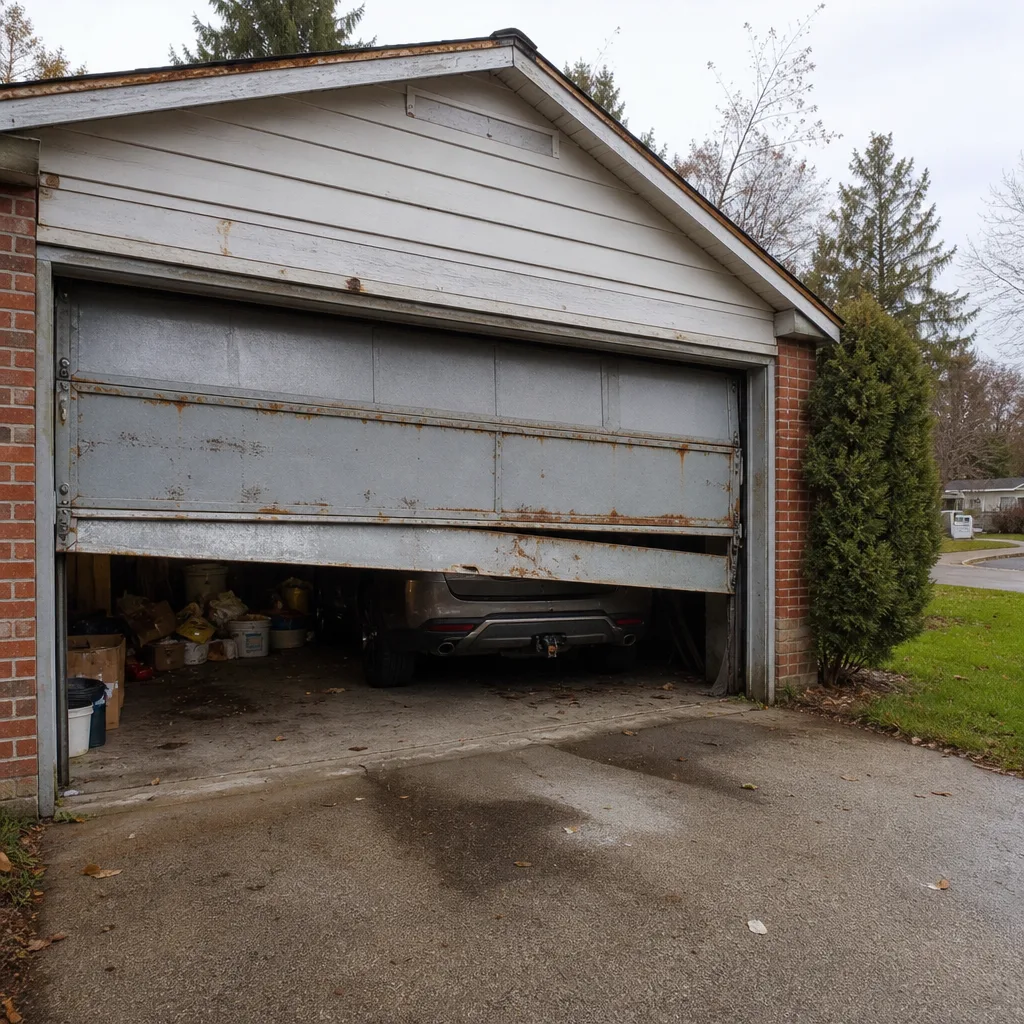 Before
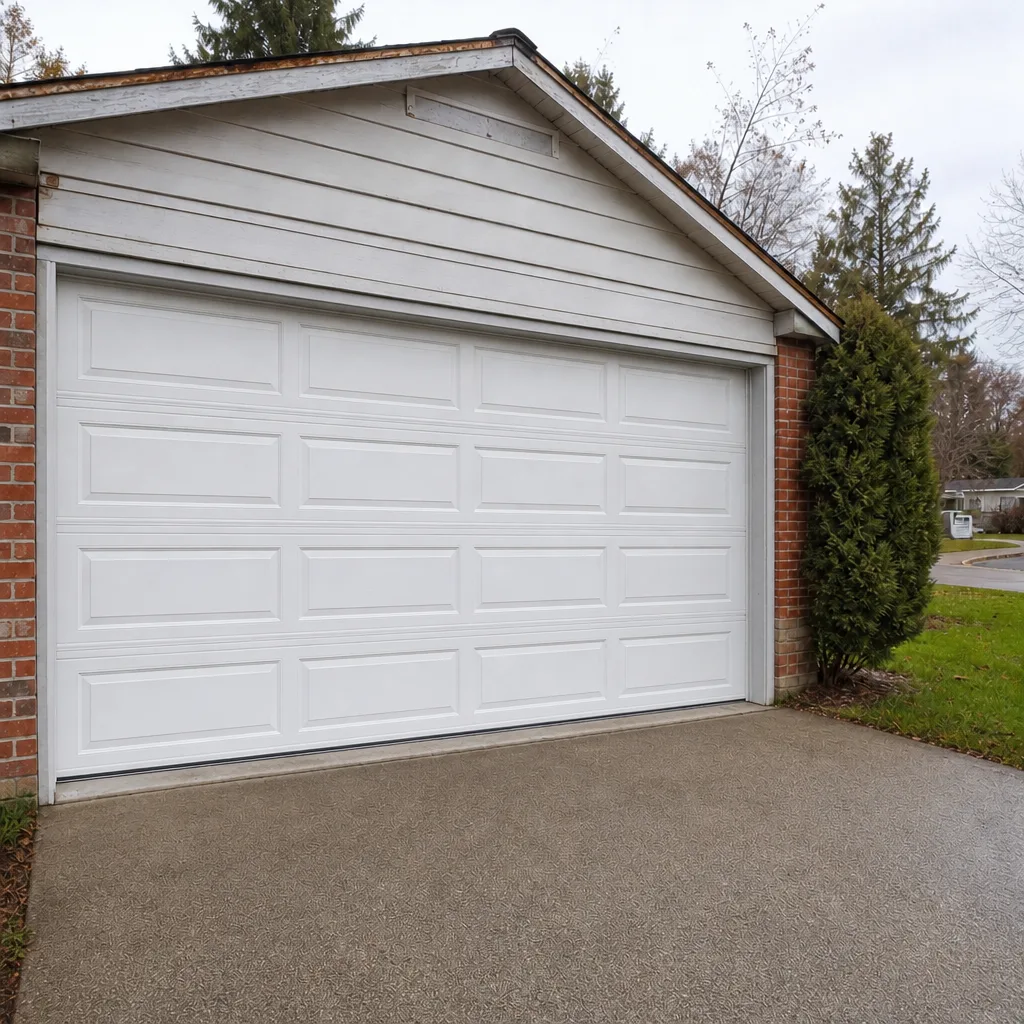 After
Common Mistakes to Avoid
- Assuming a permit is never needed. Most replacements don’t need one, but a new opening or a header modification almost always does. Ask the city before you order the door.
- Getting HOA approval after the door is installed. Custom doors aren’t returnable, and an unapproved door can force you to replace it again at your own cost. Approval comes first, in writing.
- Letting the contractor put the permit in your name. The company doing the work should be the contractor of record. If they want it in your name, that’s your cue to walk.
- Not keeping the spec sheet. On an insulated door in a conditioned garage, the manufacturer’s thermal performance documentation is what resolves the energy code question at inspection.
- Skipping the opener safety check on a new door. Photo-eye sensors and auto-reverse have to function on the new door, and an inspector will check them. So should you, before the inspector arrives.
- Treating an inspection failure as a catastrophe. It’s a scheduled correction. Fix the item, document it, and re-inspect. The mistake is not the failure – it’s trying to hide it.
- Hiring a handyman for spring work. Springs are high-tension components that require proper tools and training. This is the single most common safety error we see in Bellevue, and it can cause serious injury.
When to Call a Professional
Call a professional when the door won’t move, when a spring has failed, when the door is visibly off-track or damaged, when the opener is malfunctioning, or when you’re considering a replacement and want an honest assessment of whether a repair would do. Springs, cables, and torsion assemblies are not homeowner work – the stored tension can injure someone badly, and there’s no safe way to improvise. We also recommend calling when you’re unsure whether a permit applies, so the inspection question gets answered before the door is ordered. Bellevue Garage Door Repair Co offers free estimates in Bellevue – call (877) 541-3559. Our technicians are factory-familiar with LiftMaster, Chamberlain, Genie, Clopay, Amarr, Wayne Dalton, Craftsman, and Raynor, so we already know your system’s quirks before we arrive.
For a straightforward repair, our garage door repair page covers what a typical visit involves. If your opener is the problem, garage door opener repair walks through the diagnostics we run, including the smart-home-enabled LiftMaster and Chamberlain myQ systems and older Craftsman units that still work well with the right parts.
Frequently Asked Questions
In most cases, no. A like-for-like replacement in an existing opening on a one- or two-family home is typically treated as maintenance and doesn’t require a building permit in Bellevue. Exceptions apply when the opening, header, framing, or envelope performance changes. Confirm with the city’s Development Services Department before ordering the door, since the cost of a five-minute call is far less than the cost of a correction later. Call (877) 541-3559 for a free estimate on the door work itself.
You can, but you usually shouldn’t. Bellevue allows owner-builder permits for work on your own residence, but a new opening is a structural project, and if it fails inspection, the responsibility lands entirely on you. The contractor doing the structural work should be the one on the permit. If you’re hiring a licensed contractor, ask that they be the contractor of record. If they won’t, that’s a problem worth taking seriously.
Washington’s energy code (WAC 51-11C) sets performance requirements for the building envelope, and the exact threshold that applies to your door depends on the assembly, the garage’s construction, and whether the garage is conditioned or shares a wall with conditioned space. The city’s building department can tell you which requirement applies to your specific job. Ask before you order, and keep the manufacturer’s spec sheet so the inspector has documentation. For a free estimate on an insulated replacement, call (877) 541-3559.
You get a correction report, you fix the identified items, and you schedule a re-inspection. Re-inspections usually carry a fee, and the timeline depends on how long the correction takes. The items that fail most often are header sizing, spring attachment to the structure, missing thermal documentation, and opener safety features. None of these is catastrophic if you address them promptly. The mistake is stalling. Call (877) 541-3559 if you need help identifying what the correction requires.
Yes. HOA architectural review comes first, then the permit. If you pull the permit first and your HOA rejects the door style, color, or material, the permit is wasted and you’re stuck with a custom door that isn’t approved. Get the HOA approval in writing before you order a custom door. Bellevue has a wide range of neighborhoods with HOAs, and the review process is more involved in newer planned communities than in established blocks.
The local professionals we connect homeowners with are licensed and insured as their state requires. Before any work starts, you can and should ask for the registration and the certificate of insurance. On a permitted job, the permit should list the contractor doing the work as the contractor of record. We’re happy to walk you through what to ask for. Call (877) 541-3559 for a free estimate in Bellevue – the price is quoted and agreed before any work begins.
The Bottom Line
Garage door work in Bellevue is usually permit-free, but the exceptions – new openings, structural changes, and envelope changes on a conditioned garage – are specific enough to warrant a call to the city before you order a door. HOA approval comes before the permit. On an insulated replacement, the energy code (WAC 51-11C) applies, and the manufacturer’s spec sheet is the documentation that resolves it. On a permitted job, the contractor should be on the permit in their own name. Keep the inspection records. They’re what a buyer’s inspector will ask for later, and they’re cheap to keep and expensive to reconstruct. When the door itself is the question, call us.
Whether you’re replacing a door, repairing a failed spring, or chasing an opener that won’t respond, Bellevue Garage Door Repair Co covers the whole system. Our technicians have up to 14 years of experience, and we’re factory-familiar with LiftMaster, Chamberlain, Genie, Clopay, Amarr, Wayne Dalton, Craftsman, and Raynor. Call (877) 541-3559 for a free estimate in Bellevue – same-day service and fast dispatch from 7am to 7pm, and the price is quoted and agreed before any work starts. One call covers the whole door.
Written by the team at Bellevue Garage Door Repair Co.