Last updated November 20, 2026
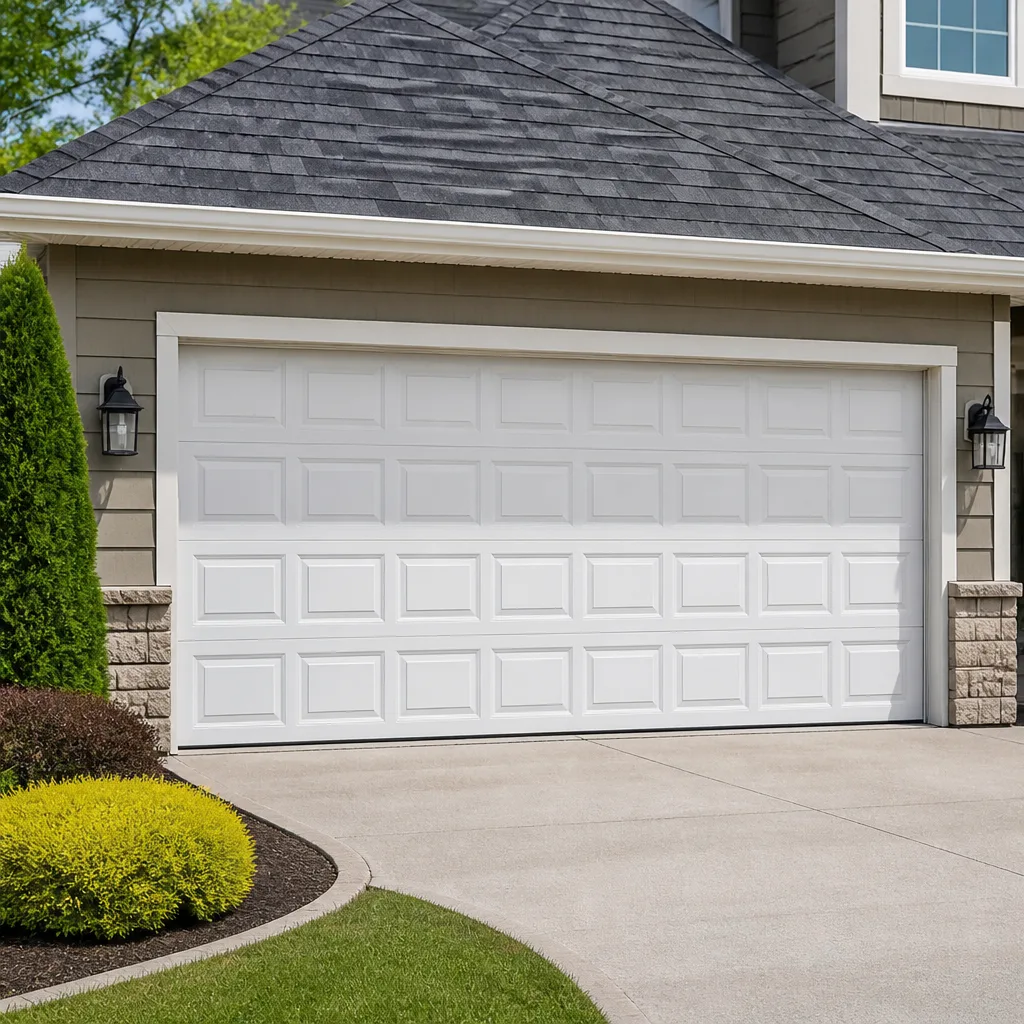 Raised-panel steel
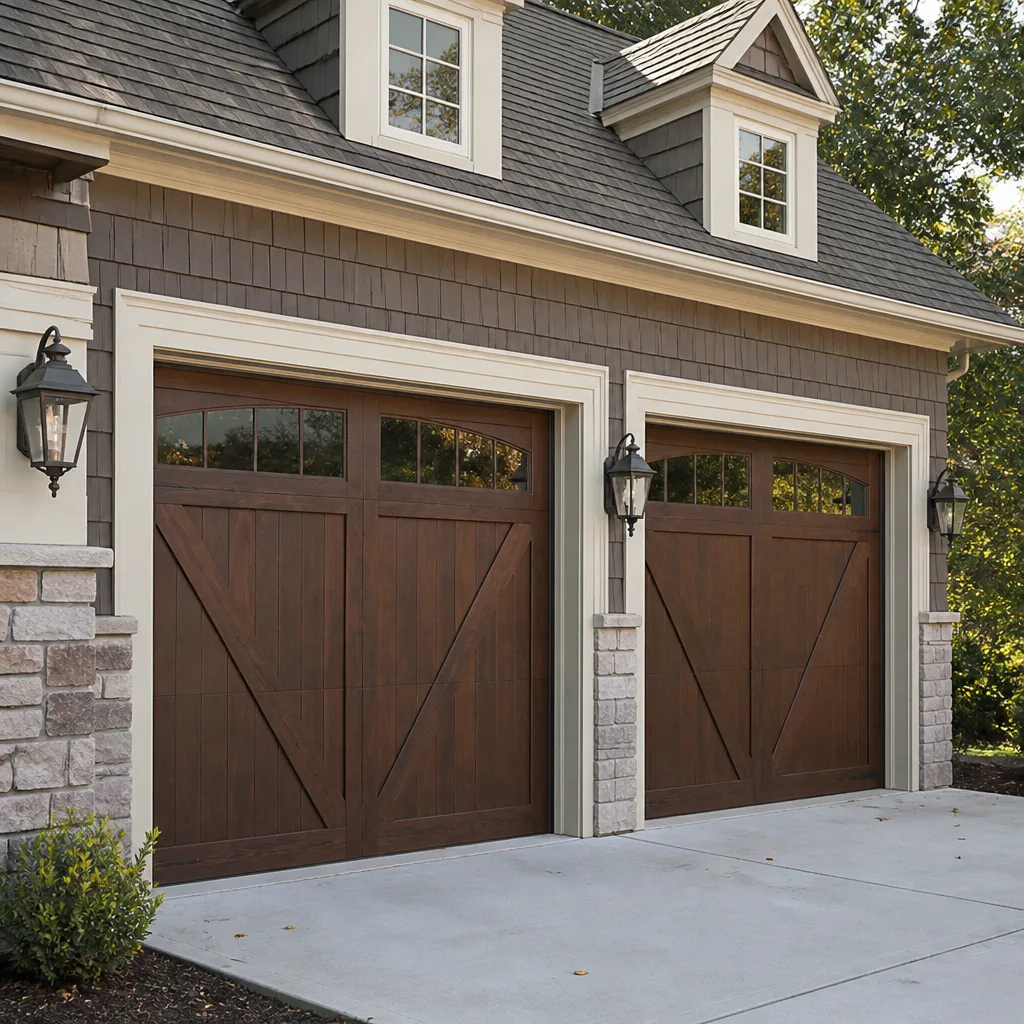 Carriage house
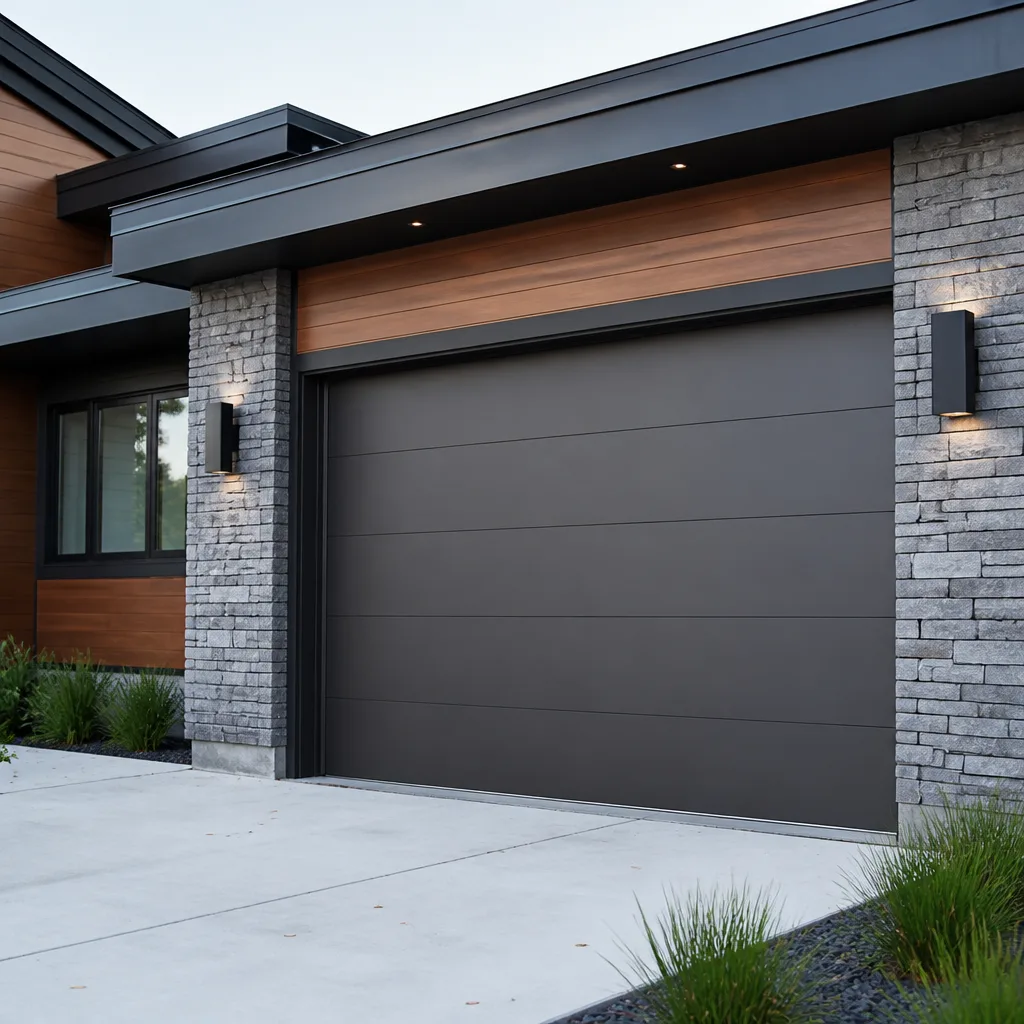 Modern flush
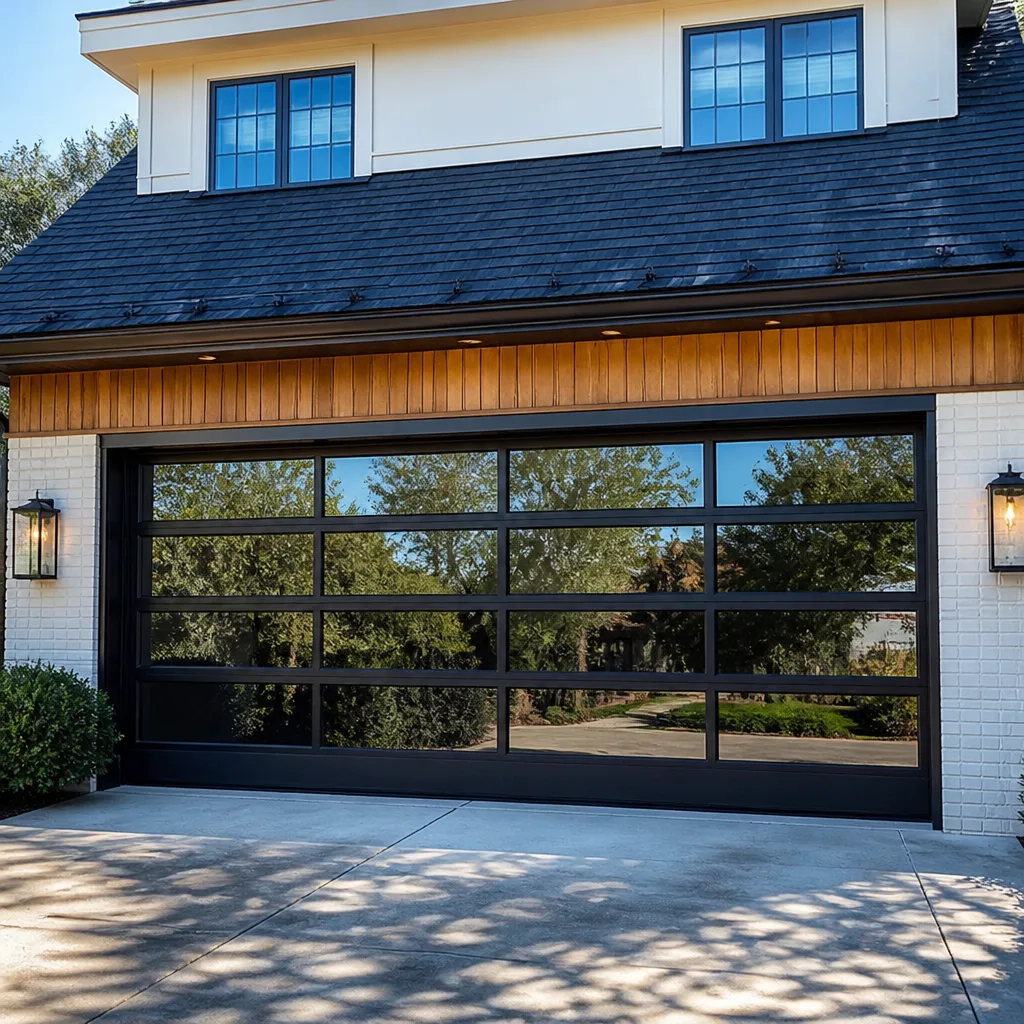 Full-view glass
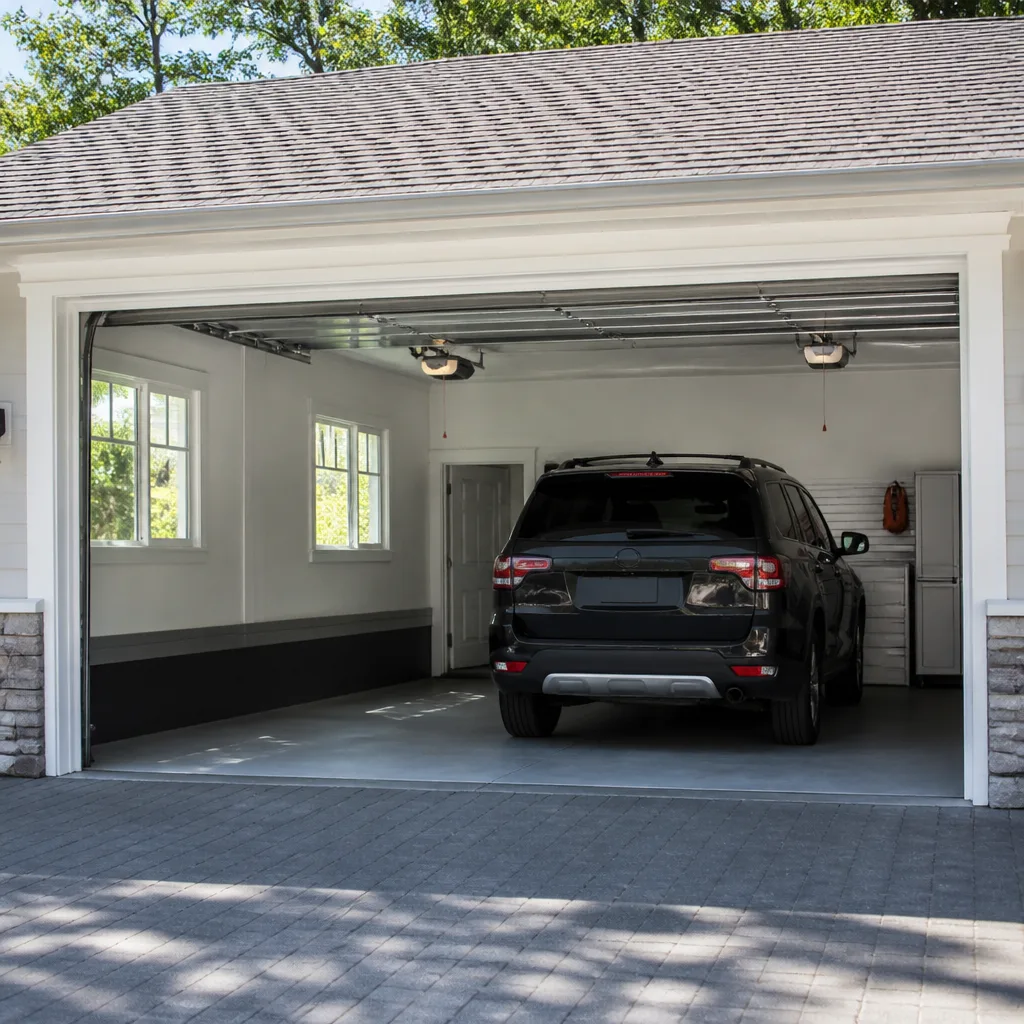 LiftMaster openers
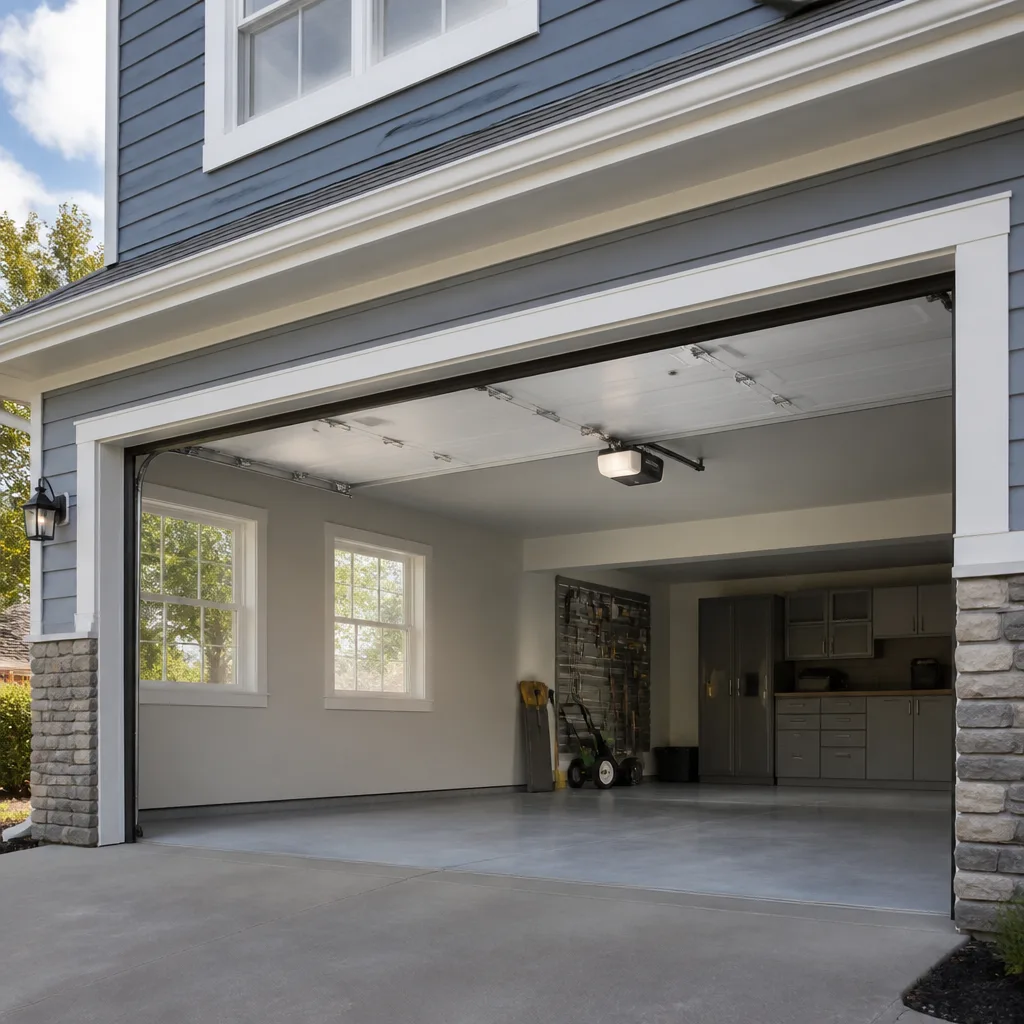 Chamberlain openers
Full 25-point door and opener safety check with every visit - springs, cables, rollers, tracks, and your LiftMaster or Chamberlain opener included
You get a price before we start. It does not change when the pro arrives.
Get your free estimateThe Complete Guide to Garage Doors in Bellevue
Bellevue gets more than 150 days of rain a year, yet most garage door guides read as if they were written for Phoenix. They talk about sun fading and desert heat, and they skip the two things that actually decide how long a door lasts here: moisture and constant thermal cycling. A door that performs beautifully in a dry climate can fail early in Bellevue if it wasn’t specified for wet air and a 40-degree swing between morning and afternoon. This guide covers what those guides leave out, from finish choice to the spec numbers that matter, so you can make the right call before anyone touches your door.
Quick Answer
A garage door in Bellevue needs three things done right: a material and finish that tolerate wet air and daily temperature swings, correct sizing and anchoring for local wind exposure, and honest advice about whether you need a repair, a panel swap, or a full replacement. Most homeowners who call us thinking they need a new door actually need a spring, an opener fix, or new hardware. The rest of this guide walks through how to tell the difference, what the specs on a quote actually mean, and when Bellevue’s permit rules apply to your project.
Styles & brands we work with
- Raised-panel steel
- Carriage house
- Modern flush
- Full-view glass
- LiftMaster openers
- Chamberlain openers
Table of Contents
- How Bellevue’s Climate Changes What You Should Buy
- Matching a Door to Bellevue’s Mix of Home Styles
- Repair, Panel Swap, or Full Replacement: Which One Do You Need?
- How to Read a Garage Door Spec Sheet
- Openers: What Bellevue Homeowners Actually Need to Know
- When Does a Garage Door Project Need a Bellevue Permit?
- What Garage Door Work Costs in Bellevue
- How to Choose a Garage Door Company in Bellevue
How Bellevue’s Climate Changes What You Should Buy
Bellevue sits in a wet, mild climate with a wide daily temperature swing for much of the year. That combination does more damage to garage doors than heat alone. Moisture attacks a door from two directions: rain blowing against the face, and humidity sitting against the back of the panel inside a closed garage. Thermal cycling works on the same panels every morning and evening as the metal or wood expands and contracts. Over years, that cycle loosens fasteners, opens seams, and accelerates finish failure.
How each material handles it:
- Steel: The most common choice in Bellevue and generally the most stable in wet air, as long as the finish holds. Bare edges and scratches are where rust starts, so touch-up matters more here than in a dry climate. Insulated steel panels handle the temperature swing well.
- Wood: Beautiful and period-correct for older Bellevue homes, but wood needs repainting or re-staining on a shorter interval here than in dry regions because it absorbs moisture and dries repeatedly. Cedar and other naturally rot-resistant species hold up better than softwoods.
- Composite and faux-wood: These have grown popular in Bellevue precisely because they mimic wood without the refinishing schedule. Quality varies, so ask what the substrate is, not just what the face looks like.
- Aluminum and glass: A good fit for modern homes, but check that the frame extrusion is thick enough to hold screws under cyclical load. Thin aluminum frames loosen over time.
Finish choice matters as much as material. A factory-applied finish with a proper primer coat outperforms field painting almost every time in this climate. If you’re painting, avoid scheduling it in the wet months, because trapped moisture under a fresh coat is a common cause of peeling here.
Matching a Door to Bellevue’s Mix of Home Styles
Most suburbs have one dominant house style, so matching a garage door is straightforward. Bellevue doesn’t work that way. Drive through neighborhoods like Bridle Trails, Crossroads, or Lake Hills and you’ll pass craftsman bungalows, mid-century ranches, and newer modern builds on the same street. Each one calls for a different door, and a choice that looks perfect on one house can look wrong on the next.
What tends to work for each style:
- Craftsman: Recessed panel doors, often with a row of windows across the top and hardware that reads as hand-forged. Amarr’s carriage-style lines and similar products fit naturally here. Color usually leans toward warm neutrals or deep greens.
- Mid-century ranch: Flat or very shallow panel profiles, horizontal lines, and clean trim. Oversized windows on the door let light into what’s often a shallow garage. Less ornament is more.
- Modern: Full-view aluminum and glass, or flush steel panels with a precise reveal. Color is usually dark or matched to the siding. The door is a design element, not a background feature.
We’ve seen plenty of Bellevue homes where the door style is right but the proportions are off. Section height, window placement, and how much of the door is glass all change the look more than the brand name on the panel. A Wayne Dalton door in the correct profile will beat a more expensive door in the wrong one every time.
Before ordering anything, photograph your house from across the street at the same time of day the door is most visible. That single step catches proportion mistakes that are hard to see from inside the garage.
Repair, Panel Swap, or Full Replacement: Which One Do You Need?
This is the decision most homeowners get wrong, usually because they call one company that only installs and get told they need a new door. In our experience, a large share of “replacement” quotes are really repair jobs. Here’s the framework we use.
Repair is the right call when:
- The door moves but won’t stay up, opens unevenly, or reverses immediately: usually a spring or cable issue.
- The opener runs but the door doesn’t move, or the remotes stopped working: an opener or safety-sensor problem.
- The door is noisy, binds, or comes off its track: a hardware, roller, or alignment fix.
- The panels are sound and the finish is intact.
A panel swap fits when:
- One or two sections are dented, cracked, or water-damaged while the rest are in good shape.
- The door model is still available or a close match can be sourced.
- The tracks and hardware are sound enough to accept a new section without realignment trouble.
Full replacement makes sense when:
- Several sections are damaged, or the door is visibly sagging along its width.
- The model is discontinued and no matching panel can be found.
- The door is a safety concern: cracked hinges, bent tracks, or a structure that no longer holds load.
- You want insulation, a quieter operation, or a different look that can’t be achieved with panels alone.
Our default is repair first. A replacement is the honest answer when repair costs approach the price of a new door, or when the door itself is the problem rather than a part on it. If you’re not sure which side of that line you’re on, garage door repair is the place to start, and a technician can tell you plainly whether a fix will hold.
How to Read a Garage Door Spec Sheet
Door quotes are full of numbers that most homeowners ignore because nobody explains them. Three of them actually matter for a Bellevue purchase: R-value, wind load rating, and section gauge. Here’s what each one means in plain terms.
- R-value measures how well the door resists heat flow. A higher number means better insulation. For an attached garage under living space, a higher R-value keeps the rooms above warmer in winter and cooler in summer. For a detached garage you mostly use for storage, a lower value is fine. Don’t pay for insulation you’ll never feel.
- Wind load rating describes the pressure the door is engineered to withstand, and it comes with a required set of reinforcement struts. Bellevue’s wind exposure varies by site, and doors on open or elevated lots face more. The rating should match what the door is actually built for; a higher number isn’t automatically better if the door wasn’t reinforced for it.
- Section gauge is the thickness of the steel, expressed as a gauge number where lower means thicker. A 24-gauge door is sturdier than a 27-gauge door and dents less, but it also weighs more, which means a heavier spring and a stronger opener. Gauge, spring, and opener are a package, not independent choices.
One more spec worth asking about: the warranty. Steel doors typically carry separate warranties for the finish and the substrate, and the finish warranty is often shorter. In a wet climate, that finish warranty is the one that matters.
Openers: What Bellevue Homeowners Actually Need to Know
Bellevue has a wide spread of opener ages. Some homes still run original Craftsman units from the 1990s, and others have modern Wi-Fi models tied into a smart home. Both are serviceable, but the diagnosis is different.
For legacy units, the usual suspects are worn gears, a failing logic board, or safety sensors that have drifted out of alignment. These are often repairable, and a technician who knows the older Craftsman and Genie platforms can usually tell you quickly whether a fix is worth it. For modern systems, the problems tend to be connectivity, sensor alignment, or the travel limits drifting after a spring or door change. LiftMaster and Chamberlain myQ systems and Genie’s connected models each have their own setup quirks, and knowing those saves time on the visit.
What to check before you call:
- Does the wall button work when the remote doesn’t? That points to the remote or receiver, not the motor.
- Is the door’s path clear, and are the safety sensors facing each other and clean?
- Did the opener start acting up right after a power outage? Travel limits often reset.
- If you see a small red or amber LED blinking on the motor head, note the pattern; it’s a diagnostic code.
Not every opener problem needs a new opener. For most households, the right move is garage door opener repair first, because a motor that’s still sound doesn’t need replacing just because a gear or a board failed.
When Does a Garage Door Project Need a Bellevue Permit?
Permit rules for garage doors vary by jurisdiction, and Bellevue’s rules are specific to the project type. The short version: swapping hardware, springs, openers, or panels is generally treated as repair and doesn’t trigger a permit, while a full door replacement or any structural work on the opening usually does.
What tends to require a permit:
- Replacing the entire door, particularly on a garage that’s part of the home’s structural envelope.
- Any change to the size of the opening, the header, or the framing around it.
- Adding a garage where one didn’t exist, or converting a space into a garage.
What typically doesn’t:
- Spring, cable, roller, hinge, and track repairs.
- Opener replacement.
- Swapping a damaged section for an identical one.
This guide can’t hand you a ruling for your specific address, and we won’t pretend otherwise. Before you schedule a full replacement, call the City of Bellevue’s building department and describe the project in one sentence. They’re the authority, and a two-minute phone call protects you from surprises at resale.
What Garage Door Work Costs in Bellevue
Costs depend on the door’s size, the part in question, and whether the work is repair or replacement. The ranges below are typical estimates for Bellevue and are intended as a starting point, not a quote. The written estimate you receive after an inspection sets the final price.
- Spring repair (one spring): typically $180 to $340. A matched pair is usually replaced together, so a pair costs roughly twice that.
- Cable replacement (per side): typically $140 to $260.
- Roller and hinge refresh: typically $120 to $280.
- Opener repair: typically $150 to $320, depending on the part.
- New opener installed: typically $350 to $850, depending on the model and whether Wi-Fi features are included.
- Single panel replacement: typically $300 to $700, depending on availability of a matching section.
- Full door replacement: typically $1,400 to $4,200, depending on material, insulation, and size.
The second question every homeowner asks is whether the price will change once the technician is on site. It shouldn’t, and it won’t with us. We quote before any work starts, in writing, and the number on that estimate is the number you pay unless you ask for something different. If a job turns out to be more involved than the quote suggested, we tell you before we continue, not after.
For a full scope and measure of what replacement involves, garage door installation covers the process in detail.
How to Choose a Garage Door Company in Bellevue
There are essentially two kinds of garage door companies in Bellevue: general handymen who’ll take the job because it’s a garage door, and specialists who work on doors every day. The difference shows up in how they diagnose. A generalist guesses. A specialist recognizes the symptom, knows the brand, and tells you what’s actually wrong.
Questions that separate them:
- Do they work on springs as a core service, or as an add-on? Springs are dangerous and take specific equipment; if a company seems reluctant, that’s a sign.
- Can they service both old and modern openers? A company that only installs new openers will usually recommend a new one regardless of the actual problem.
- Do they handle door panels, hardware, springs, and openers? You don’t want two companies because the first one doesn’t do springs.
- Will they put a quote in writing before starting, or ballpark it verbally?
- Do they know your brand? Raynor, Amarr, Wayne Dalton, and Craftsman each have quirks, and familiarity saves time.
Our technicians have up to 14 years of experience and train on 8 leading brands, so they arrive already familiar with your system. That’s the standard to ask for from anyone you hire in Bellevue.
Common Mistakes to Avoid
- Replacing the whole door when a spring will do. Dead springs are the most common reason a door stops working in Bellevue. A technician who diagnoses quickly will usually find this in minutes.
- Letting a handyman touch the springs. High-tension springs are the most dangerous component on the door. This is a specialist job, and a generalist with the wrong tools can be seriously injured, and so can you.
- Buying an opener before diagnosing the door. If the springs are bad, a new opener will make the problem worse by straining against a door it can’t lift. Fix the door first, then the opener.
- Choosing a finish before choosing a material. A beautiful paint color on the wrong substrate will peel in this climate. Get the material right first, then select the finish.
- Skipping the permit call on a full replacement. A two-minute call to the City of Bellevue avoids the resale headache of an unpermitted project.
- Paying for insulation you won’t feel. An insulated door is worth it above living space; on a detached garage, that money often goes further elsewhere.
- Ignoring noise and vibration. A door that’s been noisy for months is usually telling you a roller or bearing is failing. Fixing it early is cheaper than replacing it later.
See the difference
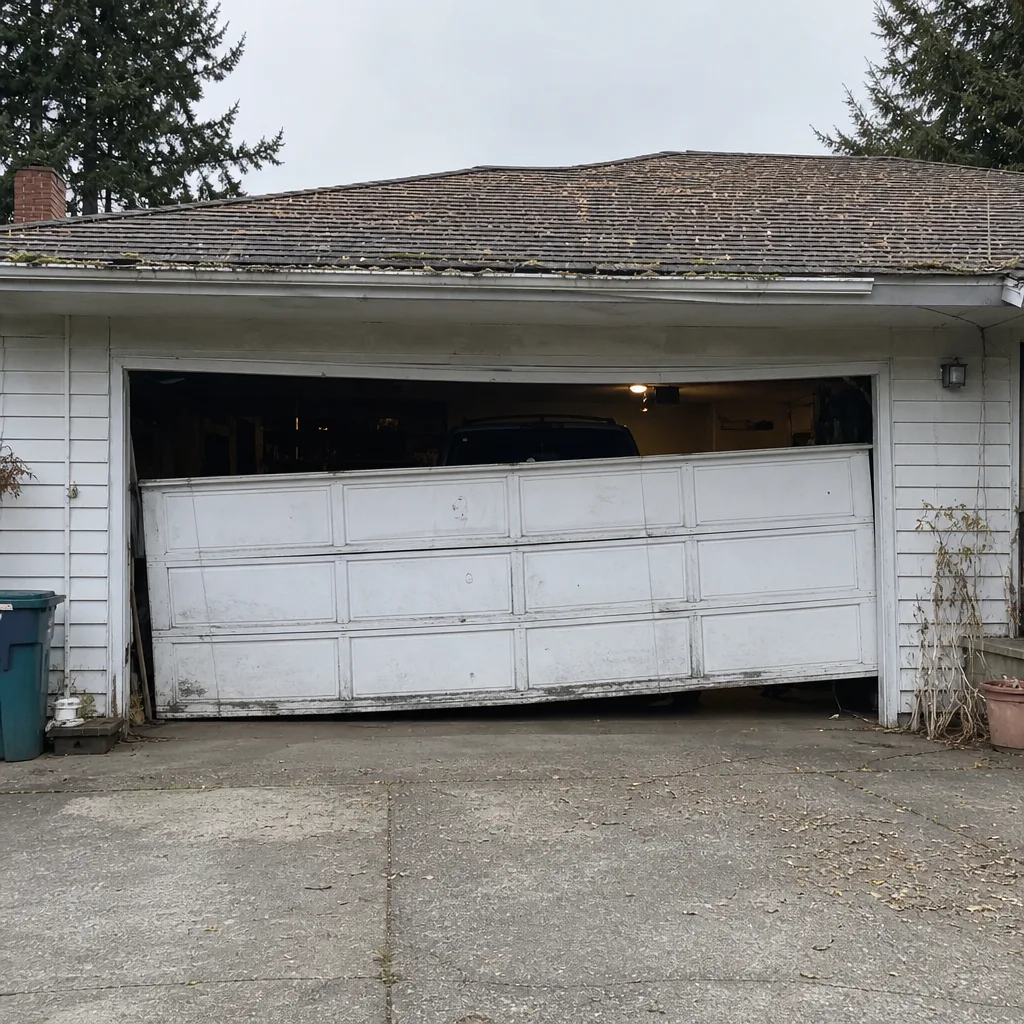 Before
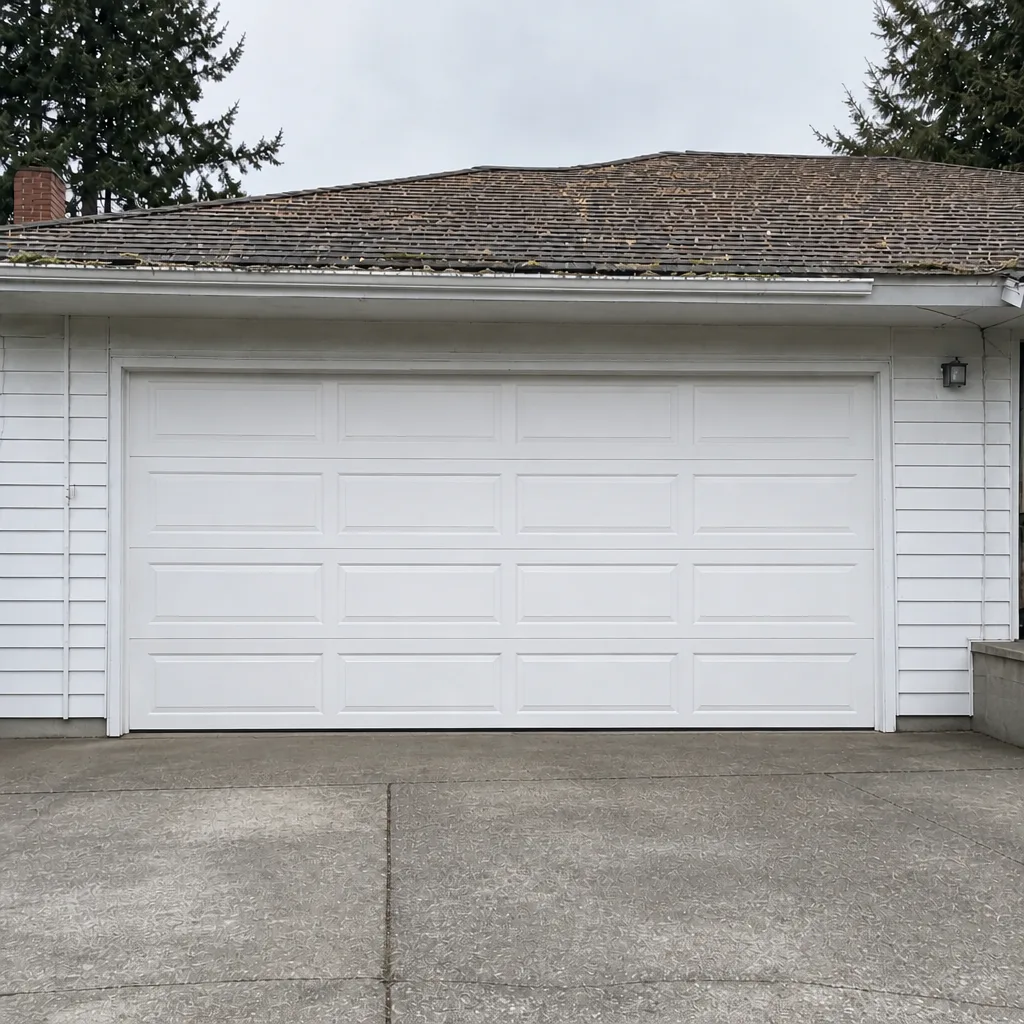 After
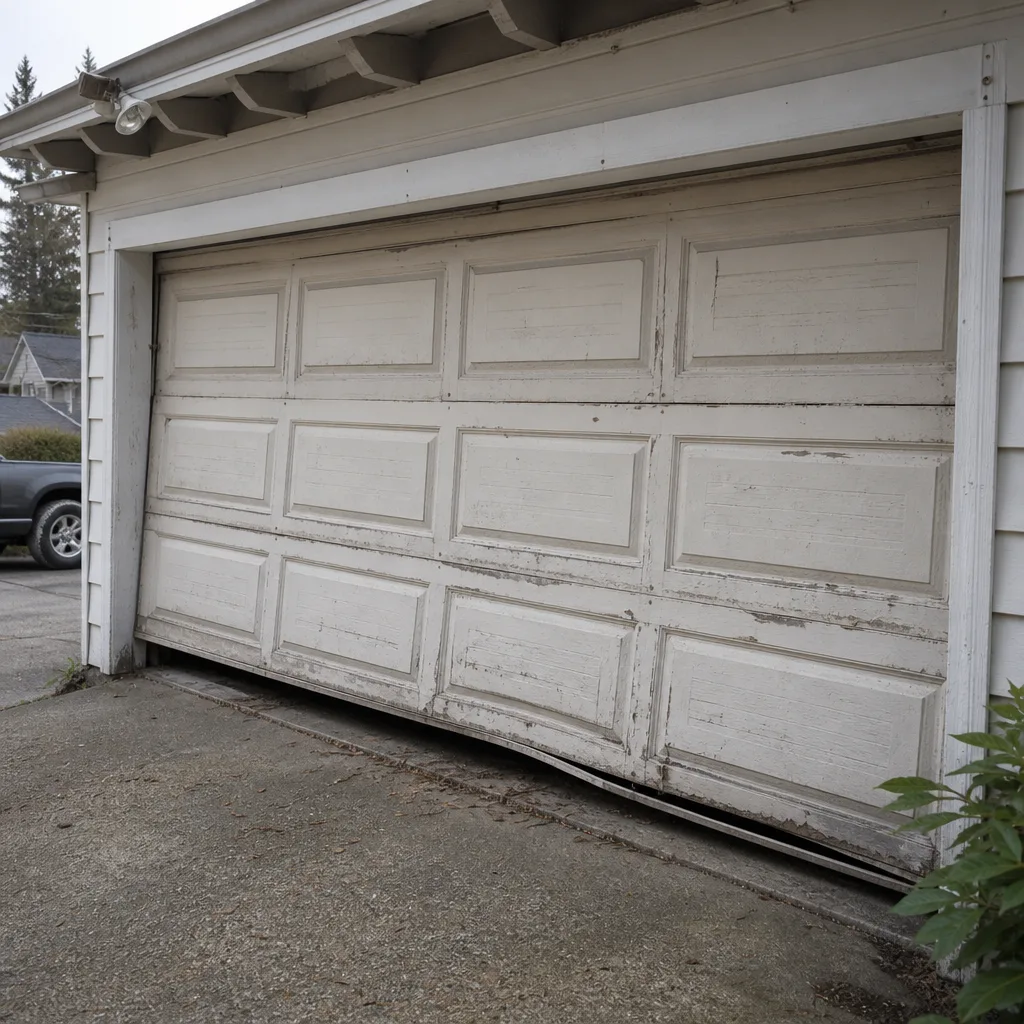 Before
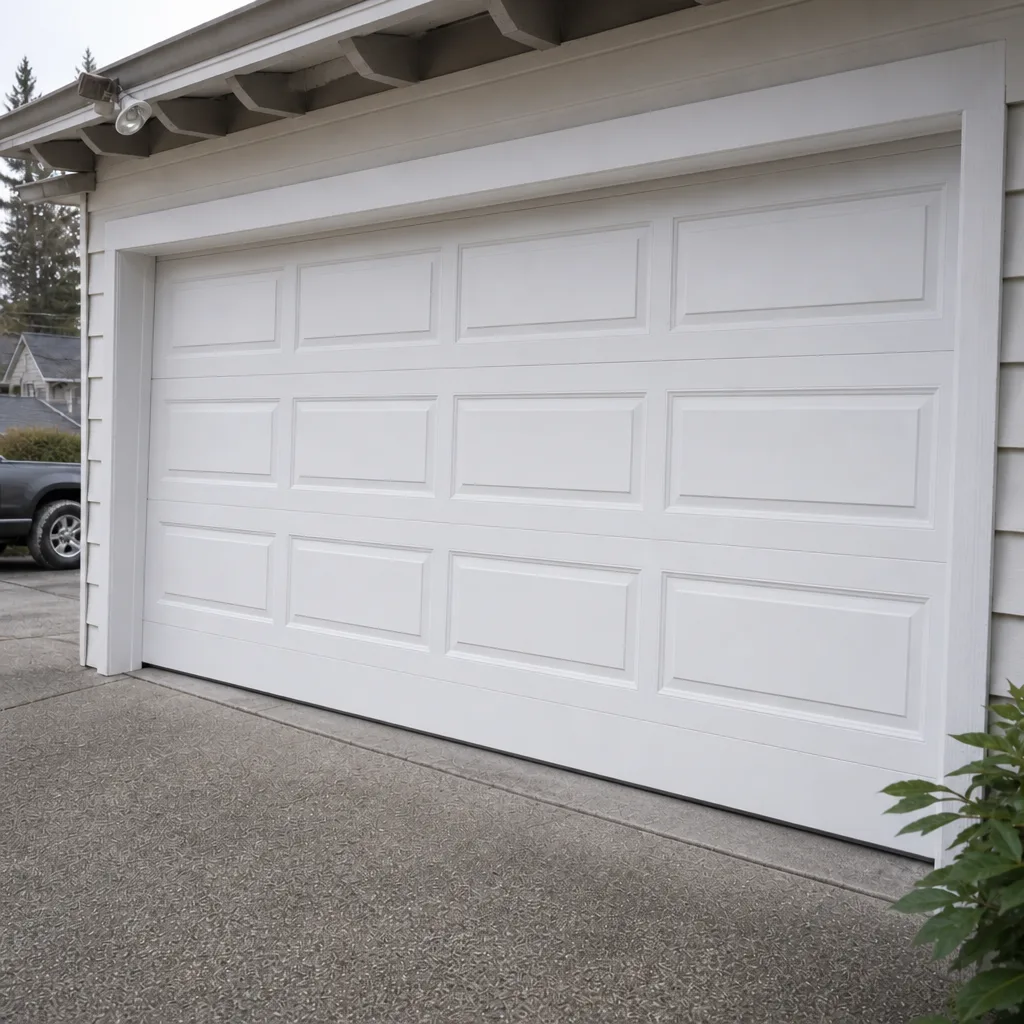 After
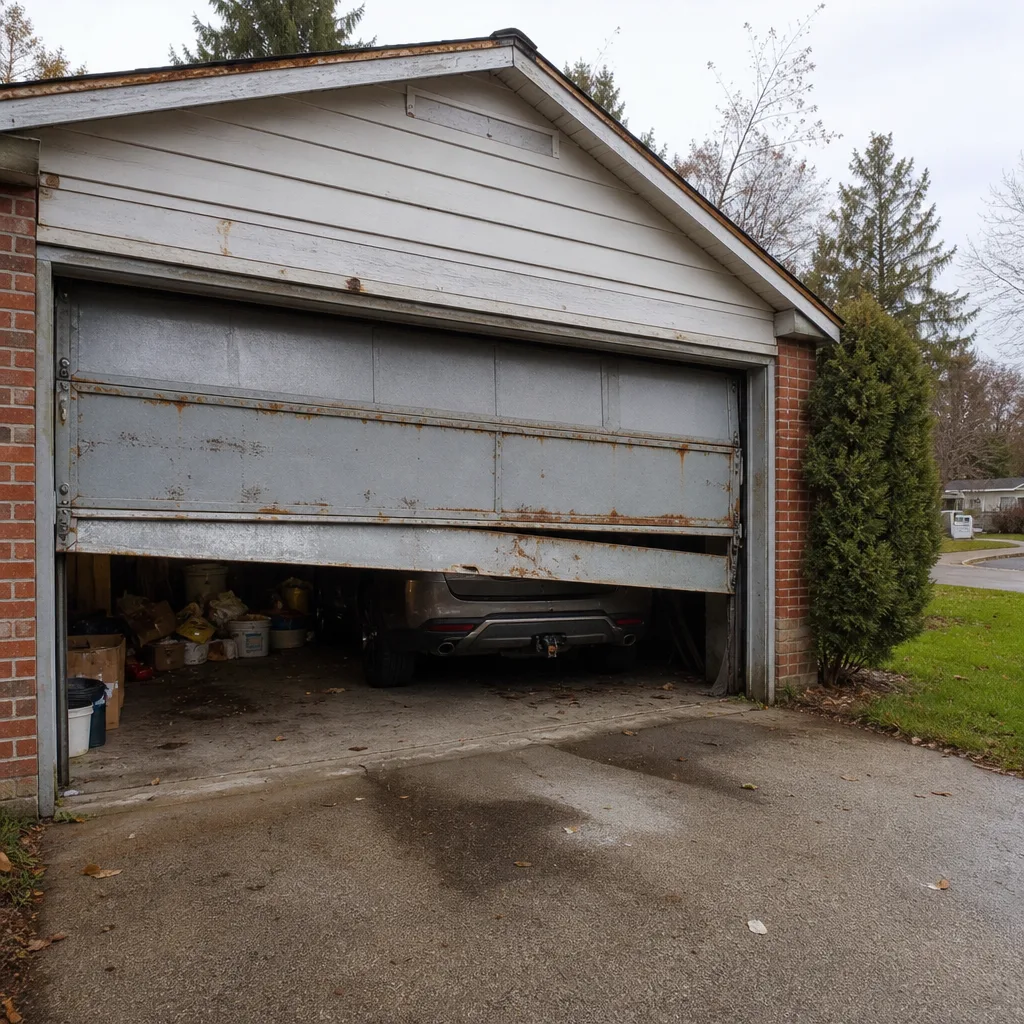 Before
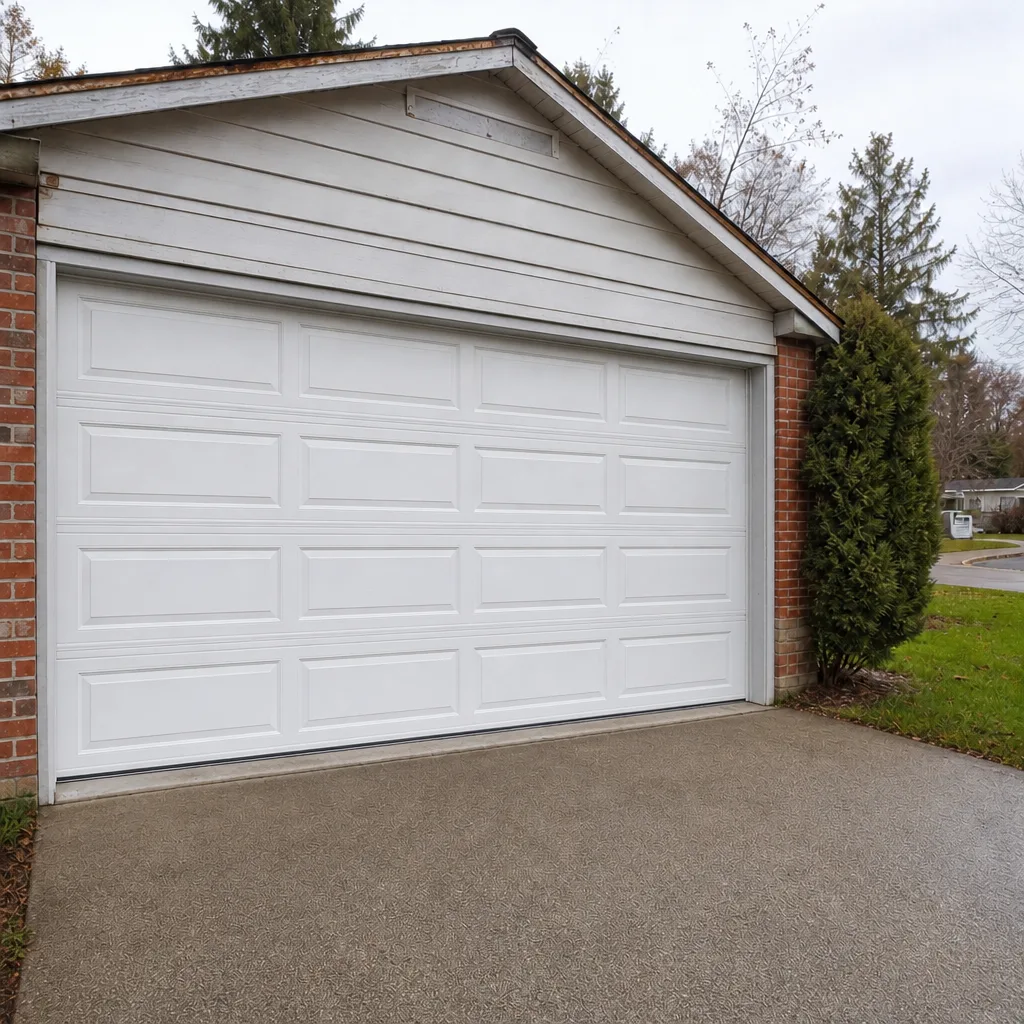 After
When to Call a Professional
Some garage door issues are safe to look at, and others aren’t. If the door is stuck half-open, hanging crooked, off its track, or if you can see a broken spring or a slack cable, stop using it and call. Don’t try to force it with the manual release. And never attempt to remove, adjust, or disconnect a spring or cable yourself; both are under extreme tension, and the wrong move can cause serious injury. That warning isn’t marketing. It’s the same one we’d give a neighbor.
Other situations that warrant a call: the opener runs but the door doesn’t, the door reverses before closing, the remotes stop working after a power outage, or you hear grinding from the motor head. If you’re replacing a door and need a match to surrounding homes, a professional can help you source a panel before you spend money.
For a fast path to a fix, Bellevue Garage Door Repair Co is the place to start, and our team can answer the diagnostic questions above by phone. Bellevue Garage Door Repair Co offers free estimates in Bellevue. Call (877) 541-3559.
Frequently Asked Questions
Spring repair in Bellevue typically runs $180 to $340 for one spring, and a matched pair costs roughly twice that because both are usually replaced together. Prices depend on the door’s size and the spring type. Call (877) 541-3559 for an exact quote; estimates are free.
Yes, in most cases we can. Same-day service is available for repair calls in Bellevue, with dispatch from 7am to 7pm. If your door is stuck open, off its track, or has a broken spring, stop using it and call us first. Call (877) 541-3559.
No. We quote before any work starts, in writing, and the price you agree to is the price you pay. If a job turns out to need more than the quote covered, we explain that before we continue, not on the invoice.
The local pros we connect you with are licensed and insured as their state requires. Our technicians have up to 14 years of experience and work with 8 major brands including LiftMaster, Chamberlain, Genie, Clopay, Amarr, Wayne Dalton, Craftsman, and Raynor.
A full door replacement typically requires a permit in Bellevue, while hardware, spring, and opener repairs usually don’t. Call the City of Bellevue building department to confirm for your address before scheduling a replacement.
Repair is usually the right call when the panels are sound and the problem is a spring, opener, or hardware. Replacement makes sense when multiple panels are damaged, the model is discontinued, or the door is a safety issue. For a firm answer, call (877) 541-3559 for a free estimate.
The Bottom Line
Bellevue’s wet climate and wide mix of home styles make a garage door decision more involved than the dry-climate guides suggest. Get the material and finish right for moisture and thermal cycling, match the profile to your house rather than to a catalog, and know the difference between repair, panel swap, and replacement. Read the spec sheet numbers, especially R-value and section gauge, and confirm permit requirements with the city before a full replacement. Repair first, replace only when it’s genuinely the right call.
Bellevue Garage Door Repair Co covers the whole door: panels, hardware, springs, and openers, for repair or installation. Call (877) 541-3559 for a free estimate.
Written by the team at Bellevue Garage Door Repair Co.